
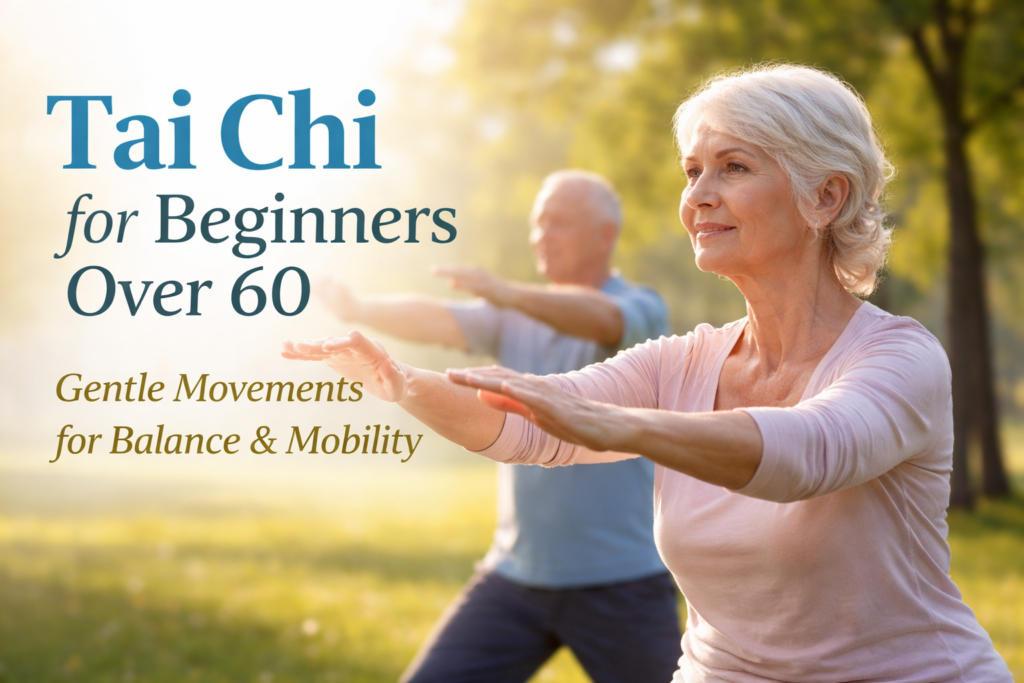
Trying a new form of exercise later in life can feel intimidating, especially if most workout programs seem fast-paced or physically demanding. Tai Chi offers a completely different approach. The movements are slow, controlled, and designed to work with the body rather than against it.
For adults over 60, Tai Chi has become one of the most widely recommended forms of gentle physical activity. The flowing motions help improve balance, flexibility, and coordination without placing heavy stress on the joints. Many people also appreciate the calming nature of Tai Chi, since the movements are combined with steady breathing and relaxed focus.
The good news is that beginners do not need to learn a full routine right away. Most people start with just a few simple movements that gradually build confidence and comfort.
What Tai Chi Is and Why Many Seniors Practice It
Tai Chi originated as a traditional Chinese practice that combines slow movement, breathing, and body awareness. Today, it is commonly practiced as a form of gentle exercise that helps maintain mobility and stability.
One of the reasons Tai Chi works so well for older adults is that it emphasizes controlled movement rather than speed or strength. Instead of sudden motions, the body shifts weight gradually from one foot to the other. This encourages better balance and helps strengthen muscles that support walking and posture.
Many seniors find that regular Tai Chi practice helps them feel more stable on their feet and less stiff during daily activities. Even a few minutes of movement each day can help the body stay flexible and responsive.

Why Tai Chi Is Often Recommended After Age 60
Maintaining mobility becomes increasingly important with age. Tai Chi provides a way to stay active while still respecting the body’s natural pace.
Some of the most common benefits reported by older adults who practice Tai Chi include improved balance, greater flexibility, and a sense of calm during and after the movements. Because the exercises are low-impact, they are often easier on the knees, hips, and back compared to many traditional workouts.
Another reason Tai Chi is popular among seniors is that it can be practiced almost anywhere. A quiet room, a backyard, or even a small open space indoors is usually enough. There is no equipment required, and movements can be adjusted to match personal comfort levels.
A Simple Way to Begin Practicing Tai Chi
When people first begin Tai Chi, the goal is not to master complicated routines. The focus is simply learning how to move slowly and deliberately while paying attention to posture and breathing.
Start by standing comfortably with your feet about shoulder-width apart. Allow your knees to bend slightly and keep your shoulders relaxed. Your arms should rest naturally at your sides.
Take a slow breath in and allow your body to settle into a comfortable position. This starting posture helps prepare the body for the gentle movements that follow.
Seeing the movements in action can make Tai Chi much easier to understand. The short beginner routine below demonstrates slow, gentle movements that many adults over 60 find comfortable to follow.

- Harmonious blend of modern fitness infused with Tai Chi DVD, Qi gong, Kung fu, Best of…
- Includes- Easy to learn Tai Chi training + 2 total body workouts + Tai Chi forms guide…
- Promotes health & wellness. Rejuvenates- Energizes-Improves Mobility- Strengthens…
- Includes- 11 x17 full color Tai Chi poster illustrating 7 forms + hand positions-Tai Chi…


Gentle Arm Float
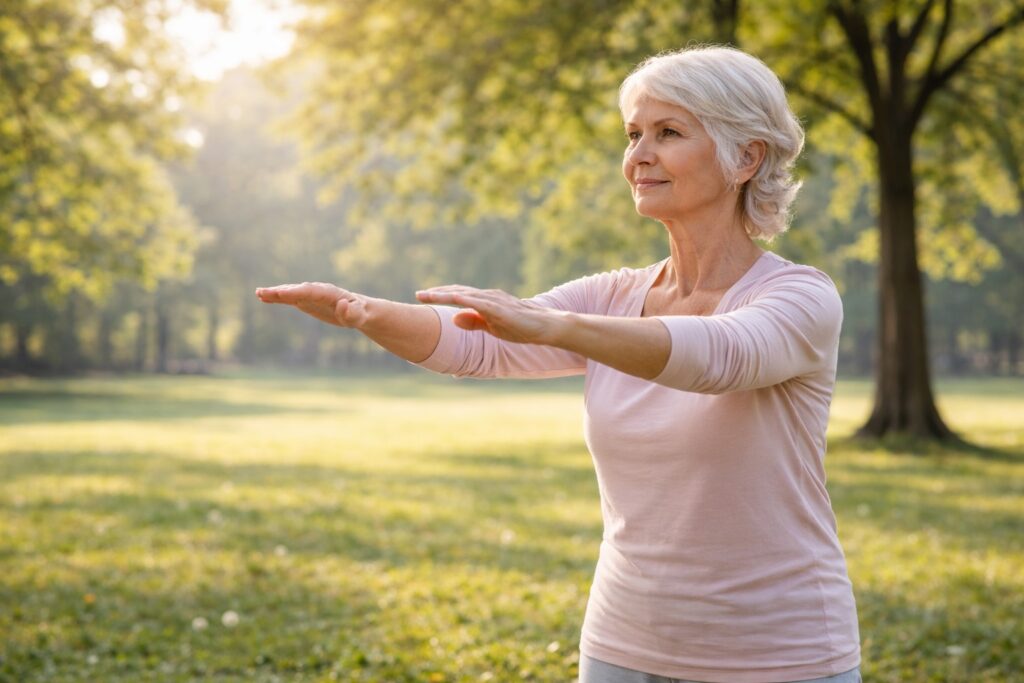
One of the easiest beginner movements involves slowly raising and lowering the arms.
Begin in the relaxed standing position. Slowly lift both arms forward until they reach about chest height. Keep the elbows slightly bent and allow the hands to float naturally rather than forcing them upward.
After reaching chest level, slowly lower the arms back down while breathing out.
This movement helps warm up the shoulders and encourages steady breathing. Many beginners repeat the motion five to eight times before moving on.
Side-to-Side Weight Shifting
Balance training is one of the reasons Tai Chi is often recommended for older adults. A simple weight-shifting movement can help develop stability and awareness of body positioning.
Stand with your feet comfortably apart. Slowly shift your weight toward your left foot while keeping your upper body relaxed. Hold this position for a moment, then gradually shift your weight toward your right foot.
Move slowly and maintain control throughout the motion. Practicing this movement for about thirty seconds helps strengthen the muscles that support balance and walking.
Some beginners prefer to practice near a chair or wall until they feel more comfortable with the motion.
Cloud Hands Movement
Another classic Tai Chi movement is often called “cloud hands.” This exercise introduces gentle upper-body coordination while encouraging relaxed posture.
Begin by slowly moving your right hand across the front of your body at chest level. Your left hand follows slightly below, moving in the same direction. As your hands travel across your body, allow your torso to turn slightly.
After reaching the side, reverse the motion and move your hands back across the body in the opposite direction.
The movement should feel smooth and unhurried. Cloud hands help improve coordination and loosen the shoulders and upper back.
Tai Chi Walking
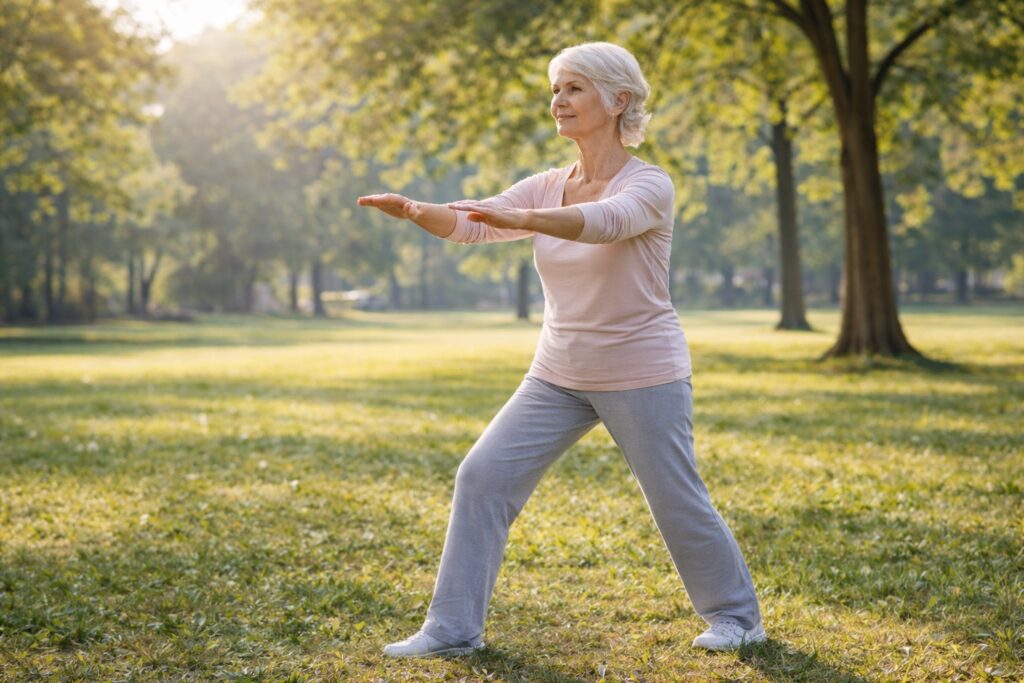
Once beginners feel comfortable with simple standing movements, Tai Chi walking can be introduced. This technique focuses on slow, deliberate steps that shift body weight carefully from one foot to the other.
Instead of taking quick steps, Tai Chi walking encourages you to place each foot down gently and maintain balance before shifting your weight forward.
If you would like more detailed instructions, you can read our complete guide on Tai Chi Walking for Seniors, which explains the technique step by step.
A Comfortable Practice Schedule for Beginners
One of the most encouraging aspects of Tai Chi is that sessions do not need to be long. Many beginners start with just a few minutes each day.
During the first week, practicing for about five minutes is often enough to become familiar with the movements. As confidence grows, sessions can gradually increase to ten or fifteen minutes.
Consistency is far more important than duration. Even short daily practice can help the body stay flexible and improve overall balance.
Safety Tips Before Starting Tai Chi
Although Tai Chi is considered one of the safest forms of exercise, beginners should still keep a few precautions in mind.
Practicing on a flat surface helps prevent slips or uneven footing. Wearing comfortable clothing and supportive shoes can also make movements easier.
Some beginners prefer to practice next to a chair, especially while learning balance movements. This provides a sense of stability and reassurance during early practice sessions.
Movements should always feel comfortable and controlled. If any motion causes discomfort or dizziness, it is best to stop and rest.
If you have existing medical conditions or concerns about starting new physical activity, speaking with a healthcare professional beforehand can provide additional guidance.
- Harmonious blend of modern fitness infused with Tai Chi DVD, Qi gong, Kung fu, Best of…
- Includes- Easy to learn Tai Chi training + 2 total body workouts + Tai Chi forms guide…
- Promotes health & wellness. Rejuvenates- Energizes-Improves Mobility- Strengthens…
- Includes- 11 x17 full color Tai Chi poster illustrating 7 forms + hand positions-Tai Chi…
Final Thoughts
Tai Chi offers a gentle and approachable way to stay active while improving balance and flexibility. The slow movements make it possible for beginners to progress at their own pace without feeling rushed or overwhelmed.
For many adults over 60, Tai Chi becomes more than just exercise. It becomes a daily habit that encourages calm movement, steady breathing, and a greater awareness of how the body moves.
Starting with a few simple movements is often all it takes to begin experiencing the benefits.
FAQ: Frequently Asked Questions
Is Tai Chi safe for beginners over 60?
Tai Chi is widely considered one of the safest forms of exercise for older adults because the movements are slow and controlled. Many beginners practice next to a chair or wall for extra stability while learning the basic motions.
How often should seniors practice Tai Chi?
Many beginners start with five to ten minutes per day. As the body becomes more comfortable with the movements, practice sessions can gradually increase to fifteen or twenty minutes several days per week.
Do I need special equipment to practice Tai Chi?
No equipment is required to begin practicing Tai Chi. Comfortable clothing and supportive shoes are usually enough. Some people prefer to practice on a flat indoor surface or in a quiet outdoor space.
Can Tai Chi help improve balance for seniors?
Tai Chi movements focus on slow weight shifting and controlled posture. These motions help strengthen muscles that support stability, which may help improve balance during everyday activities like walking or standing.
Is Tai Chi better than walking for seniors?
Both activities can be beneficial. Walking helps support cardiovascular health, while Tai Chi emphasizes balance, coordination, and gentle flexibility. Many seniors choose to practice both as part of a balanced routine.