
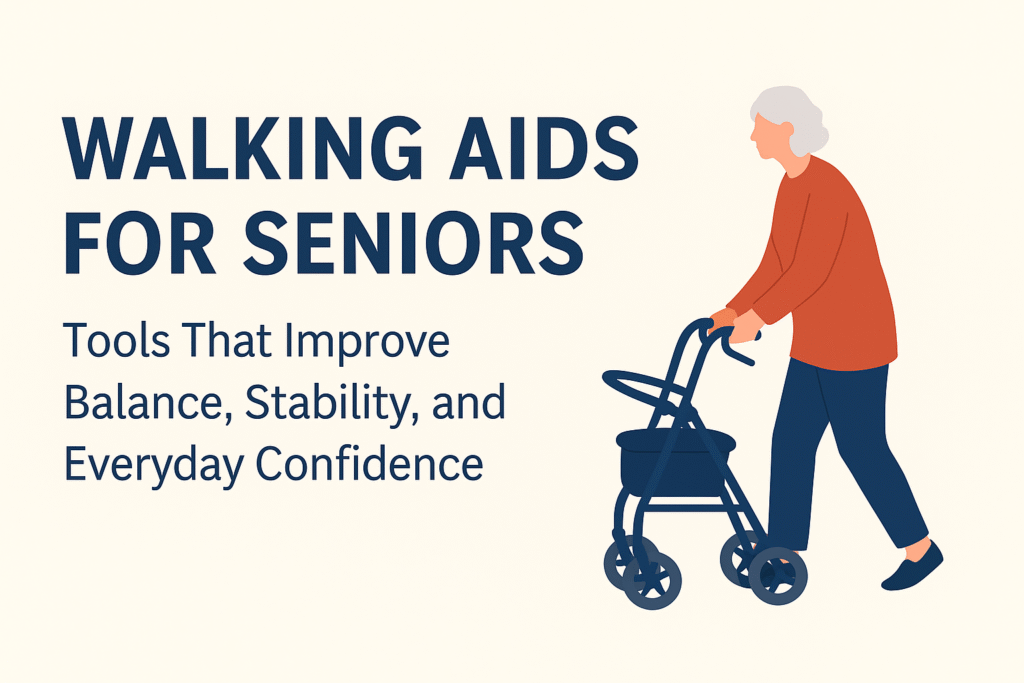
Walking aids can make everyday movement safer, steadier, and far more comfortable for seniors who experience balance changes, joint stiffness, or reduced mobility. These tools aren’t a sign of weakness—they’re practical, supportive solutions that help older adults remain independent and confident while walking at home, outdoors, or in public spaces.
With the right walking aid, seniors can take smoother steps, reduce the risk of falls, and move without the fear or hesitation that often comes from instability or sore joints. Whether you need a little added support or a dependable device for daily mobility, there is a walking aid designed to match your comfort level and activity needs.
Why Walking Aids Matter for Seniors
Balance naturally changes over time due to muscle loss, arthritis, circulation changes, and long periods of sitting. A walking aid helps keep movement steady by offering additional support where your body needs it most. Many seniors also feel more secure when stepping out of the car, walking into stores, visiting family, or navigating uneven driveways.
Using a walking aid prevents unnecessary strain on the hips, knees, and ankles while improving posture and reducing wobbling. These benefits help seniors stay active, participate in daily activities, and move with more comfort and dignity.
Signs You May Benefit From a Walking Aid
- feel unsteady or cautious while walking
- use furniture or walls for support
- hesitate when stepping up or down
- struggle with joint stiffness or arthritis
- have experienced a recent fall or near fall
- tire quickly when walking distances
- have difficulty balancing on one foot
If any of these feel familiar, a walking aid can provide steady, reliable support.
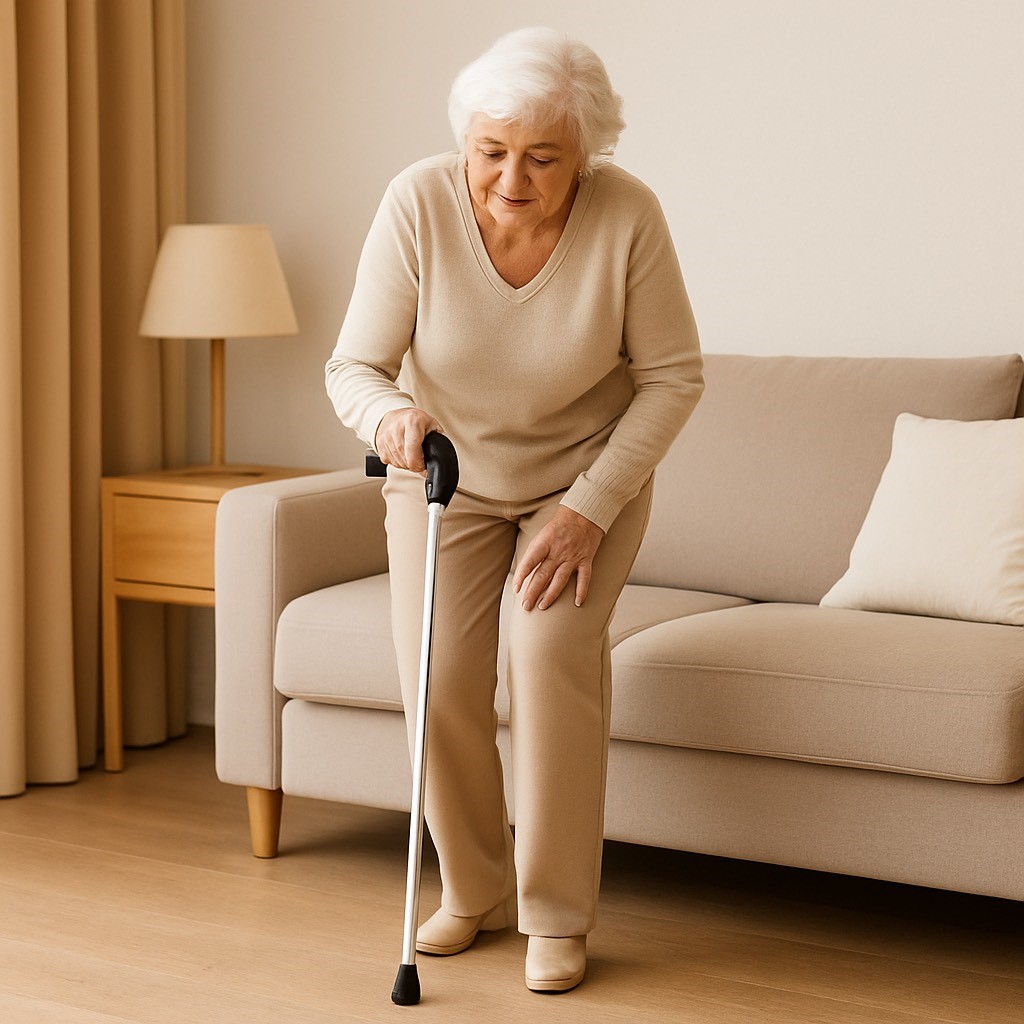
Types of Walking Aids for Seniors
Each walking aid offers a different level of support. Here’s a breakdown to help you choose confidently.
1. Canes
Canes provide light support and help reduce pressure on one side of the body. They are often used by seniors with mild balance concerns or joint discomfort.
Best For:
✔ Mild balance issues
✔ Arthritis in the hips or knees
✔ Extra support while walking short distances
Types of Canes:
- Standard canes
- Quad canes (extra stability)
- Folding canes (travel-friendly)
- Offset handles for better weight distribution
2. Walkers (Standard / Two-Wheel)
Walkers offer full-body support and help seniors maintain upright posture. They are extremely stable and ideal for uneven surfaces or longer walking distances at home.
Best For:
✔ Moderate balance issues
✔ Recovery from surgery
✔ Seniors who need support on both sides
3. Rollators (Four-Wheel Walkers)
Rollators are walkers with wheels and a hand brake. Many include a seat, basket, and comfortable hand grips. These are great for seniors who want freedom of movement and prefer a walking aid that glides.
Best For:
✔ Seniors who walk regularly
✔ Outdoor use
✔ Shopping, appointments, and errands
✔ Needing a place to sit and rest
4. Knee Walkers
These devices are used mainly when recovering from a foot or ankle injury. They offer mobility without placing pressure on the injured leg.
Best For:
✔ Foot injuries
✔ Short-term mobility support
5. Gait Belts & Support Accessories
While not walking aids themselves, they can help caregivers safely assist seniors who need stability when rising or walking.
Best For:
✔ Seniors with very limited mobility
✔ Caregiver-assisted walking
How to Choose the Right Walking Aid
Choosing the right walking aid can feel confusing, but focusing on safety, comfort, and your daily needs makes the process easier.
Ask yourself:
- Do I need light support or full stability?
- Am I walking indoors, outdoors, or both?
- Do I need a seat to rest?
- Do I want something foldable for travel?
- Am I recovering from surgery or a long-term condition?
If you’re unsure, many seniors begin with a simple cane or rollator, depending on their level of mobility.
Recommended Walking Aids for Seniors
Finding the right walking aid can make daily movement safer, more comfortable, and more confident. Whether you’re looking for extra balance support, improved stability on uneven surfaces, or help reducing pressure on the hips and knees, the walking aids below are chosen with senior mobility and safety in mind.
Each option is designed to provide steady support, reduce the risk of falls, and make walking feel more natural and secure. From lightweight canes to enhanced rollators with built-in seats, these recommendations help you move with greater ease while supporting long-term independence and daily activity.
stability canes
- [STURDY & RELIABLE] – KingPavonini walking cane is made with premium aluminum alloy, make…
- [OPTIMIZED 4-PRONGED QUAD BASE] -The size of the 4-pronged base of the walking cane has…
- [DUAL HANDLE DESIGN] – The first offset handle with foam pad for soft grip, which is non…
- [SAFER HEIGHT ADJUSTMENT MODE] – The cane can be adjusted in 5 height gears from 32 inches…

- ENHANCED STABILITY WITH A 4-PRONGED QUAD BASE: Experience reliable support with this…
- CUSTOMIZABLE COMFORT AND SUPPORT: Your unique needs are met with a cane that adjusts to…
- STRONG AND RELIABLE: Embrace the ease of a cane that’s light enough to carry effortlessly…
- QUALITY BUILT TO LAST: Just as your spirit is resilient, so should be the tools you rely…
lightweight rollators

- ULTRA LIGHTWEIGHT ROLLATOR —Weighs just 12.6 lbs., but supports a weight capacity of up…
- EASY-TO-USE BRAKE HANDLES—Ergonomic handles are easy for seniors and fragile hands to…
- HEIGHT-ADJUSTABLE SEAT AND HANDLES—12×12″ padded seat adjusts 18-23″ from the floor…
- FOLDABLE ALUMINUM FRAME—Easily transports thanks to lightweight design and folding frame

- Stable Walking Support: The Drive Rollator Walker delivers reliable mobility assistance…
- Smooth Indoor & Outdoor Navigation: Designed to support confidence while moving, this…
- Customizable Comfort: Built for personal fit and long-term use, this rollator includes a…
- Enhanced Portability: Ideal for active lifestyles, this walker features compact folding…
foldable travel canes

- Up To 8 Adjustable Height: Rehand adjustable cane fits for people from 5′(152cm) to…
- Relieve Palm Pressure: Compared with traditional T grip devices, rehand innovative handle…
- All Terrain & Shock Absorbing: Cutting edge patented technology combines these 2 in 1. All…
- Wrap It Up: Being constructed with durable & lightweight aluminum frame, with a…

- COLLAPSIBLE & COMPACT DESIGN FROM A TRUSTED BRAND: The Vive folding cane securely locks in…
- LIGHTWEIGHT & ADJUSTABLE ALUMINUM FRAME: Made with durable, corrosion-resistant anodized…
- ERGONOMIC GRIP & WRIST STRAP: The ergonomic hand grip contours to your hand, reducing…
- SLIP-RESISTANT RUBBER TIP: Enhance traction and stability with the slip-resistant rubber…
Tips for Using Walking Aids Safely
Walking aids are most effective when used correctly. Here are simple tips to stay safe:
- Adjust the height so your elbows bend slightly
- Keep the device close to your body
- Step naturally—don’t lean too far forward
- Use brakes on rollators when stopping or sitting
- Replace worn rubber tips or wheels
- Keep walkways free of clutter and loose rugs
- Use proper posture for better balance
Practicing slow, steady movement helps build confidence with your device.
How Walking Aids Work With Balance Exercises
Walking aids provide immediate stability, while balance exercises improve long-term strength and control. Seniors who combine both often feel stronger and more confident in their steps.
Great companion articles:
✔ Low-Impact Balance Exercises for Seniors
✔ Tai Chi Walking for Seniors
✔ Chair Yoga for Seniors
Using these routines helps improve coordination, smooth your steps, and reduce stiffness.
When to Consider Upgrading Your Walking Aid
You may need a different walking aid if you:
- feel unstable even with your current device
- experience wrist or shoulder discomfort
- need more support than a cane provides
- plan to walk longer distances
- require a rest seat while outdoors
Many seniors start with a cane, then move to a rollator for comfort and stability.
Frequently Asked Questions
Do walking aids really prevent falls?
Yes. Walking aids help keep your steps smoother and reduce wobbling, which lowers the risk of falls.
What is the safest walking aid for seniors?
Rollators and standard walkers offer the most support. Canes provide lighter stability.
Can I use a walking aid indoors and outdoors?
Yes. Rollators and canes work well in both environments, while standard walkers are best indoors.
How do I know if a cane is the right height?
Your elbow should bend slightly (about 20 degrees) when your hand rests on the handle.