
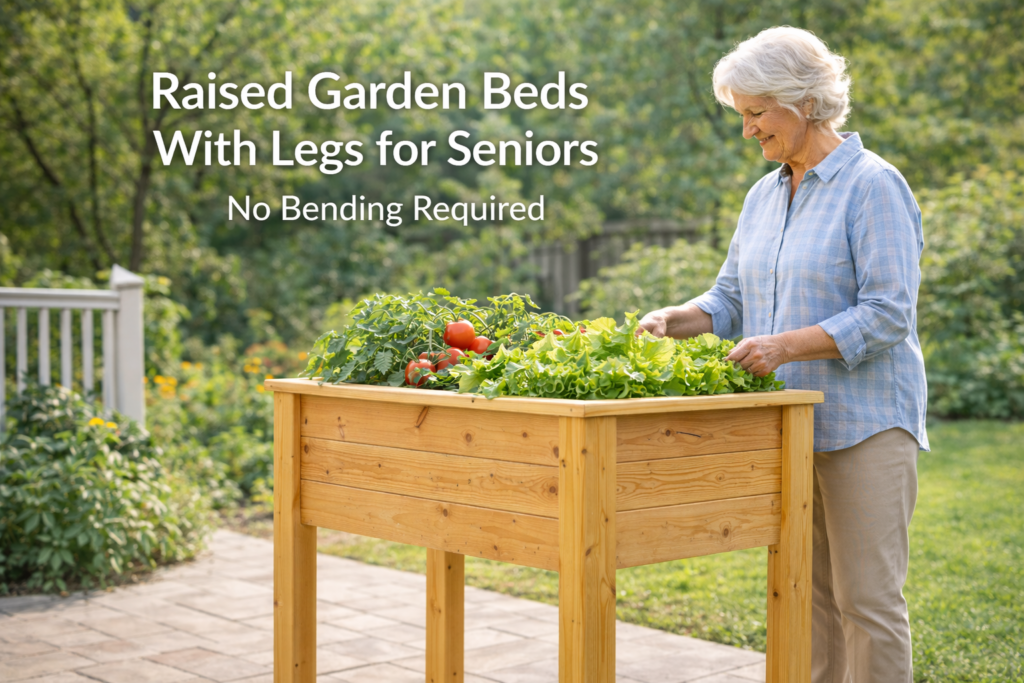
There’s a major difference between a raised garden bed and a tall raised garden bed.
Many gardeners assume any elevated frame will solve bending problems. In reality, standard 10–12 inch beds still require leaning forward. For older adults, that small bend repeated dozens of times can trigger back stiffness, hip discomfort, or knee strain.
Tall raised garden beds change the entire experience.
When the soil is lifted to mid-thigh or waist height, gardening becomes upright, stable, and far more comfortable. Instead of crouching or kneeling, you work at a natural standing position. That shift alone can extend your gardening years significantly.
If comfort and mobility matter, height isn’t a luxury — it’s essential.
What Counts as “Tall”?
In practical terms, a tall raised garden bed is typically:
• 24 inches high (minimum comfort range)
• 30 inches high (ideal for many seniors)
• 32–36 inches high (waist-level gardening)
The sweet spot depends on your height. A good rule: the top of the soil should sit high enough that you only need to lean slightly forward — not bend at the waist.
Waist-level beds almost eliminate bending entirely.
Why Height Matters After 60
As flexibility changes over time, repetitive bending becomes harder on the body. Gardening is repetitive by nature — planting, watering, trimming, harvesting.
Taller beds reduce:
• Lower back strain
• Knee pressure
• Hip compression
• Repeated up-and-down movement
They also improve balance. When you’re upright, your center of gravity remains stable. That reduces fall risk compared to crouching or kneeling.
For anyone managing arthritis or stiffness, that’s a meaningful difference.
Best Tall Raised Garden Bed Styles
Not all tall beds are built the same. Some are deep-ground frames placed directly on soil, while others are elevated planters supported by legs.
Deep-ground raised beds typically sit 24 to 30 inches high and provide generous soil depth for vegetables with larger root systems. Because they rest on the ground, they offer strong stability and work well in backyard garden spaces.
Elevated planters with legs sit closer to waist height and significantly reduce bending. These models are ideal for patios or smaller outdoor areas and often include built-in drainage and lower shelves for tool storage.
The right choice depends on your space, comfort level, and how much flexibility you want throughout the season.
1. 24–30 Inch Grounded Raised Beds
These sit directly on the soil but are built tall enough to reduce deep bending. They’re ideal for larger vegetable gardens and can handle heavy crops like tomatoes, peppers, and squash.
Look for:
• Reinforced corner brackets
• Thick wood or powder-coated steel
• Minimum 12-inch soil depth
This style offers stability and high yield potential.
2. Waist-High Planter Beds With Legs (30–36 Inches)
These eliminate bending almost completely. They work beautifully for:
• Herbs
• Lettuce
• Strawberries
• Smaller vegetables
They are especially useful for patios, decks, or smaller yards.
Make sure the legs feel sturdy and the bed does not wobble when lightly pushed.
3. Tall Metal Modular Beds
Powder-coated steel designs are becoming more popular because they’re durable and long-lasting. Many reach 24–32 inches in height and provide excellent drainage.
Rounded edges are important for safety.
Soil Depth Still Matters
Height is important — but depth cannot be ignored.
For most vegetables:
• Leafy greens need 6–8 inches
• Peppers and beans need 10–12 inches
• Tomatoes and root vegetables need 12–18 inches
Tall beds often allow deeper soil layering, which improves drainage and root health.
More depth equals stronger plants.
Stability and Safety
A tall bed should feel solid, not shaky.
Before purchasing, consider:
• Weight capacity
• Leg reinforcement
• Corner strength
• Wind exposure
If you live in an area with strong winds, grounded tall beds may be safer than elevated ones.
Gardening should feel steady — not unstable.
Is 36 Inches Too Tall?
For some individuals, yes.
If the bed sits above your waist, reaching into the center may require stretching. That can cause shoulder strain. A width of 2–3 feet is ideal so you can access the center without leaning.
Comfort is personal. Measure from the ground to your wrist while standing relaxed — that’s often a good height reference.
What Grows Best in Tall Beds?
Tall beds are perfect for:
• Lettuce and spinach
• Tomatoes
• Cucumbers
• Herbs
• Strawberries
• Peppers
They also warm up faster in spring, which can extend your growing season.
If you’re wondering what to plant and when, timing matters more than most gardeners realize. Frost dates vary widely across the country, and planting too early or too late can reduce your harvest.
To simplify the process, we created a state-based planting planner that gives you seasonally appropriate guidance based on your location. Select your state and month below to see what crops are best suited for your area.
Premium State Planting Planner
Select your state. If you leave month blank, we’ll show what you can plant right now.
Final Thoughts
Tall raised garden beds are one of the smartest upgrades a gardener can make.
They protect your back.
They protect your knees.
They support independence.
Gardening should feel energizing, not exhausting. If bending is becoming uncomfortable, adjusting the height of your growing space can restore comfort quickly.
Choosing the right tall, raised garden bed isn’t about trend — it’s about preserving a hobby that brings peace and purpose. And with the right setup, there’s no reason to stop.
Frequently Asked Questions
What height raised garden bed reduces bending the most?
Beds between 30 and 36 inches tall reduce bending significantly and allow most seniors to garden comfortably while standing upright.
Are 24-inch garden beds tall enough?
For many people, 24 inches provides noticeable relief compared to ground gardening. However, 30 inches or higher often offers the most comfort.
Do taller garden beds need more soil?
Yes. Taller beds require additional soil volume, which increases weight and improves drainage and root development.
Are tall raised beds stable in windy areas?
Grounded tall beds are generally more stable than planter-style beds with legs. Always ensure the frame is reinforced and placed on level ground.
Choose the Right Height for Comfortable Gardening
A tall raised garden bed can reduce strain and help you garden longer with better posture and stability. Compare recommended height options built for comfort.
See Top Raised Garden Bed Picks