
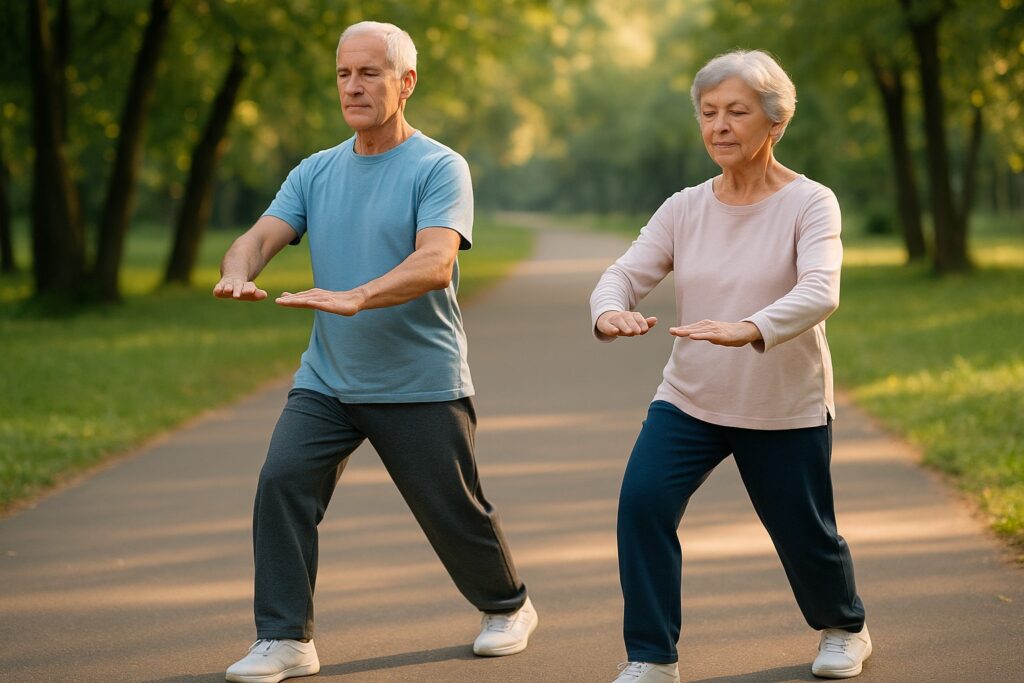
Tai Chi Walking is becoming one of the fastest-growing senior wellness trends because it offers gentle movement, balance support, stress relief, and a simple way to stay active without strain. Unlike regular Tai Chi sequences, Tai Chi Walking focuses on slow steps, intentional weight shifts, and calming breathing—making it ideal for seniors who want a low-impact exercise that improves mobility and daily stability. It’s beginner-friendly, joint-friendly, and requires no special equipment, making it one of the easiest exercises to start right away.
What Is Tai Chi Walking?
Tai Chi Walking is a slow, mindful walking pattern that blends the principles of Tai Chi—smooth movements, controlled breathing, and balance awareness—into each step. Instead of walking normally, each step is intentional: heel first, weight transfer, soft knee bend, and a gentle exhale. This creates a calming flow while strengthening the legs, hips, and core.
Tai Chi Walking is often taught as a beginner entry point for those nervous about balance issues, stiff joints, or starting a new exercise routine after years of inactivity.

Why Tai Chi Walking Is Perfect for Seniors Over 60
Seniors love Tai Chi Walking because it feels safe, slow, and purposeful—not overwhelming or physically demanding. Each movement supports circulation, joint comfort, and posture without sudden twists or bending. Because the pace is slow and steady, most seniors feel confident starting on day one. It’s also a wonderful option for seniors seeking exercise without pressure, pain, or complex learning curves.
The Science: How Tai Chi Walking Improves Stability & Strength
Tai Chi is well-studied for improving balance, reducing falls, strengthening lower-body muscles, and calming anxiety. Tai Chi Walking uses the same principles but focuses specifically on gait stability. The slow stepping pattern retrains the body to shift weight smoothly, increasing coordination, proprioception (spatial awareness), and hip strength. Over time, this reduces the risk of stumbles and supports safer daily walking, especially on uneven surfaces.
Key Benefits of Tai Chi Walking After 60
Better Balance — By slowing your steps, your body naturally learns controlled foot placement and safer weight shifts.
Stronger Legs & Hips — Each step gently works the muscles that stabilize you.
Improved Mobility — Many seniors report looser joints, smoother steps, and easier transitions when walking or climbing stairs.
Stress & Anxiety Relief — The breathing rhythm calms tension and helps with sleep.
Low Impact — Perfect for seniors with arthritis or joint stiffness.
No Equipment Needed — Just comfortable shoes or a soft walking surface.
How to Start Tai Chi Walking: A Simple 5-Step Guide
1. Stand Tall & Relax Your Shoulders
Begin with relaxed posture, soft knees, and a calm breathing rhythm.
2. Shift Weight Slowly
Before stepping, shift your weight onto one foot until you feel balanced.
3. Step Forward Heel First
Gently place your heel on the ground, then roll through the ball of your foot.
4. Transfer Weight Smoothly
Shift weight forward slowly—no rushing, no leaning.
5. Breathe With Each Step
Inhale as you prepare the step. Exhale as the foot lands and weight transfers.
Just 5–10 minutes a day builds confidence and mobility.
How Many Minutes Should Seniors Do Tai Chi Walking?
Most seniors begin with 5 minutes a day, gradually increasing to 10–15 minutes as comfort improves. Even short sessions benefit balance, circulation, and joint mobility. Because the movements are gentle, Tai Chi Walking can be done daily.
Safety Tips for Seniors Trying Tai Chi Walking
• Start indoors on a flat surface
• Use supportive sneakers with non-slip soles
• Keep steps small and controlled
• Use a chair or counter for balance until confident
• Avoid uneven surfaces until you feel steady
• Move slowly enough that breathing stays relaxed
This practice should feel calming—not tiring or stressful.
Beginner Tai Chi Walking Routine (Daily 6-Minute Plan)
Minute 1: Stand, breathe deeply, loosen shoulders
Minute 2: Weight-shift practice (left–right)
Minute 3: Slow steps forward (6–8 steps only)
Minute 4: Pause, breathe, practice soft knees
Minute 5: Slow steps backward or sideways
Minute 6: Gentle cooldown stance, relaxed breathing
This helps strengthen walking confidence in all directions.
Recommended Gear for Tai Chi Walking Beginners
While Tai Chi Walking requires no special equipment, a few supportive items can make each practice feel safer and more comfortable. Many seniors enjoy using stability sneakers, a non-slip practice mat, or lightweight balance tools to improve confidence while learning slow, controlled steps. These simple additions help reduce wobbling, protect joints, and create a steady environment for beginners.
Stability Sneakers for Seniors: Men & Women
The right stability sneakers can make walking, standing, and everyday movement feel safer and more comfortable. These shoes support your arches, cushion your joints, and improve balance with non-slip soles designed to reduce slips and wobbling. Many seniors feel more confident the moment they switch to stability footwear—especially during exercises like Tai Chi Walking, light stretching, or indoor routines.

- Precision knit mesh with roomy toe box so toes have space to spread out improving…
- Soft cushioning PU for even wear with comfort ridges in forefoot and memory foam topper.
- Supportive EVA midsole with rubber outsole for a long lasting smooth stride.
- Medicare approved for Diabetic footwear

- B’ in physical item denotes Women’s
- Speed-lacing closure system
- Speed lacing closure system

- Double insoles – with the Propet EV (Extra Volume) insole system, customized fit and…
- Features a footbed that can be removed to accommodate custom orthotics
- Adjustable hook and loop strap closure

- Adjustable hook and loop closure with padded collar and tongue
- Rigid heel counter with removable pu footbed
- A5500 medicare approved for diabetic footwear
Non-Slip Balance Mat (for Indoor Practice)
(Great for practicing Tai Chi walking safely at home)

- IMPROVE BALANCE & STRENGTH – Foam creates unstable surface for working on balance & core…
- ALL FITNESS LEVELS – A challenge for athletes who want to improve functionality & power…
- NON-TOXIC & NON-SLIP – Environmentally conscious TPE material is sweat-proof and…
- MULTIPLE USES – Versatile pad can be used as a seat cushion, a knee pad for gardening, a…

- IMPROVE BALANCE & STRENGTH – Foam creates unstable surface for working on balance & core…
- ALL FITNESS LEVELS – A challenge for athletes who want to improve functionality & power…
- NON-TOXIC & NON-SLIP – Environmentally conscious TPE material is sweat-proof and…
- MULTIPLE USES – Versatile pad can be used as a seat cushion, a knee pad for gardening, a…
Where Should Seniors Practice Tai Chi Walking?
✔ Indoors in a hallway
✔ Outdoors on level concrete
✔ On a patio or screened porch
✔ At a park walking path
✔ On carpet if balance needs extra support
The location is less important than maintaining a slow, controlled stepping rhythm without distractions.
Tai Chi Walking vs Regular Walking: Which Is Better for Seniors?
Regular walking boosts heart health, burns calories, and strengthens legs.
Tai Chi Walking improves balance, gait control, safety, and calmness.
Many seniors do both:
• Tai Chi Walking for balance & coordination
• Regular walking for fitness & steps
Combining the two offers the best overall mobility after 60.
Who Should Avoid Tai Chi Walking?
Most seniors can safely practice Tai Chi Walking, but caution is important if you have:
• severe balance disorders
• recent hip/knee surgery
• advanced neuropathy
• dizziness or fainting spells
A doctor or physical therapist can help determine safety if you’re unsure.
When You’ll Start Noticing Results
Most seniors feel:
✔ calmer breathing after 1 day
✔ better hip mobility after 3–5 sessions
✔ stronger balance within 2 weeks
✔ improved confidence on stairs after 30 days
It builds gradually without pressure or strain.
Related Articles on Exercises
More easy exercises you can try at home to feel stronger, steadier, and more confident every day.
• Exercises for Seniors
• Chair Yoga for Seniors
• Low-Impact Balance Exercises
• Sleep Exercises at Night
• Walking Aids for Seniors
Frequently Asked Questions
Is Tai Chi Walking safe for seniors over 70?
Yes. The movements are slow, low-impact, and beginner-friendly. Many seniors over 70 use Tai Chi Walking to improve balance and mobility.
Can Tai Chi Walking help prevent falls?
Yes. Studies show Tai Chi reduces fall risk by improving balance, leg strength, and coordination.
Do I need special equipment?
No. Just comfortable shoes or socks with grip.
How long should a beginner practice?
Start with 5 minutes per day and increase slowly.
Is this good for seniors with arthritis?
Yes. Tai Chi Walking’s smooth, gentle motions reduce joint strain.