As eating habits change after 60, comfort and texture often become just as important as flavor. Dental changes, sensitive gums, digestive concerns, or simply reduced appetite can make tougher foods difficult to enjoy.
That is where slow cooker meals can make a meaningful difference.
Slow cooking naturally softens meats, vegetables, and grains. The gentle, steady heat breaks down fibers over time, creating meals that are easier to chew, swallow, and digest — without sacrificing nutrition.
This guide focuses on slow cooker meals designed specifically for seniors who prefer softer textures and comforting consistency.
Why Soft-Texture Meals Matter After 60
Food should not feel like work.
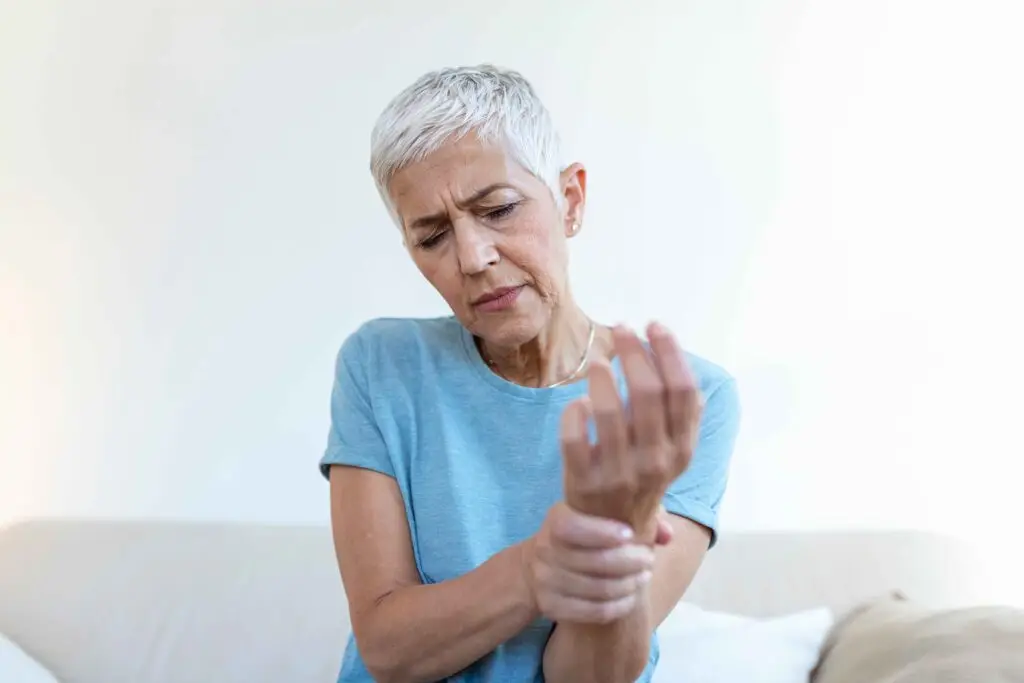
For many older adults, chewing fatigue, dry mouth, or dental appliances can make traditional meals uncomfortable. Tough meats, raw vegetables, and dry baked goods may require more effort than they are worth.
Soft meals:
• Reduce strain on teeth and jaw
• Lower the risk of choking
• Support comfortable digestion
• Encourage consistent eating
When meals are easier to eat, seniors are more likely to maintain steady nutrition throughout the day.
Why Slow Cookers Are Ideal for Soft Meals
The slow cooker is one of the most effective tools for creating tender, easy-to-chew food.
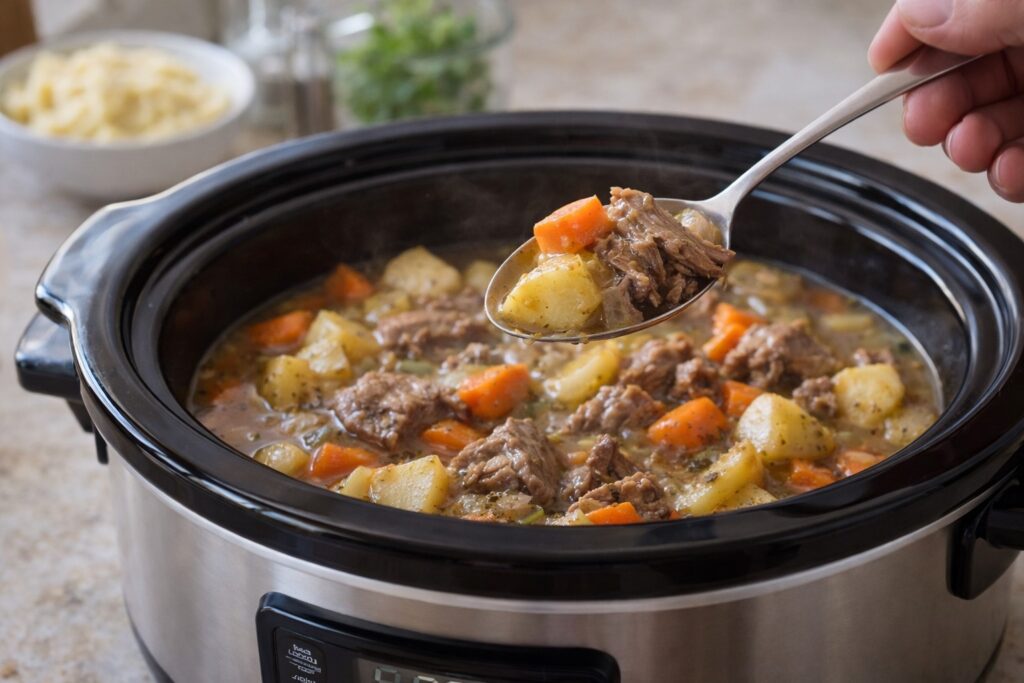
Long cooking times allow connective tissues in meat to break down naturally. Vegetables become soft without losing structure. Grains and legumes absorb liquid and become gentle on digestion.
Unlike stovetop cooking, which can dry food quickly, slow cookers retain moisture. This is especially helpful for seniors experiencing dry mouth or reduced saliva production.
The result is food that feels comforting rather than challenging.
Important Safety Considerations
While soft food is beneficial, it is still important to prioritize safety.
Meals should remain moist rather than dry. Broths, sauces, and gravies can help maintain texture.
Meats should be fully cooked and tender enough to break apart easily with a fork.
If swallowing difficulties are present, a healthcare professional or speech therapist should provide guidance on appropriate food consistency.
Soft does not mean pureed unless medically advised. Many seniors simply benefit from tender, moist textures.
Soft & Easy-to-Chew Slow Cooker Meal Ideas
Below are senior-friendly slow cooker meals that focus on gentle texture and balanced nutrition.
Shredded Chicken with Vegetables
Boneless chicken breasts cooked slowly in low-sodium broth with carrots and potatoes become fork-tender and moist. The chicken naturally shreds, making it easier to chew.
Beef Pot Roast with Gravy
A lean cut of beef cooked low and slow with onions and broth creates a soft, pull-apart texture. Serve with mashed potatoes for added comfort.
Turkey and Rice Casserole
Lean ground turkey combined with rice and vegetables cooks into a cohesive, soft meal that is easy to portion.
Creamy Lentil Stew
Lentils soften beautifully in the slow cooker and provide plant-based protein and fiber in a gentle form.
Slow Cooker Apples with Cinnamon
Soft-cooked apples make a naturally sweet dessert or breakfast topping that is easy to chew and digest.
Salmon with Soft Vegetables
Slow-cooked salmon becomes flaky and tender. Pair with zucchini or squash for a complete, gentle meal.
Each of these meals prioritizes moisture, tenderness, and simple preparation.
Supporting Nutrition Without Strain
Soft meals can still be balanced and nourishing.
A helpful approach includes:
• Lean protein for strength
• Soft vegetables for fiber and vitamins
• Whole grains or legumes for steady energy
• Moderate sodium to support heart health
When meals are comfortable to eat, maintaining a consistent routine becomes easier.
Who This Guide Is For
Soft slow cooker meals are helpful for:
• Seniors with dental sensitivity
• Older adults who tire easily while chewing
• Individuals adjusting to dentures
• Caregivers preparing meals for loved ones
• Anyone who prefers tender, comforting foods
Texture should never be a barrier to good nutrition.
Final Thoughts
Soft and easy-to-chew slow cooker meals are about dignity and comfort. They remove the frustration that sometimes comes with changing eating habits while still supporting independence.
The slow cooker allows meals to become tender naturally, without complicated preparation. For many seniors, this small shift makes daily cooking more manageable and more enjoyable.
Food should feel welcoming — not difficult.
Frequently Asked Questions
Why are soft meals important for seniors?
Soft meals reduce strain on teeth and jaw muscles, lower the risk of choking, and make eating more comfortable for older adults with dental sensitivity or chewing fatigue.
Are slow cookers good for soft-texture meals?
Yes. Slow cookers use gentle, steady heat that naturally tenderizes meat, vegetables, and grains, creating moist and easy-to-chew meals without drying them out.
Can soft slow cooker meals still be nutritious?
Absolutely. Soft meals can include lean proteins, vegetables, legumes, and whole grains. Texture adjustments do not reduce nutritional value when meals are balanced.
What if a senior has swallowing difficulties?
If swallowing concerns are present, consult a healthcare professional for guidance on appropriate food consistency. Some individuals may require modified textures beyond standard soft foods.
Are soft crock pot meals suitable for seniors living alone?
Yes. Slow cooker meals are easy to prepare, require minimal supervision, and often provide multiple portions, making them ideal for independent living.