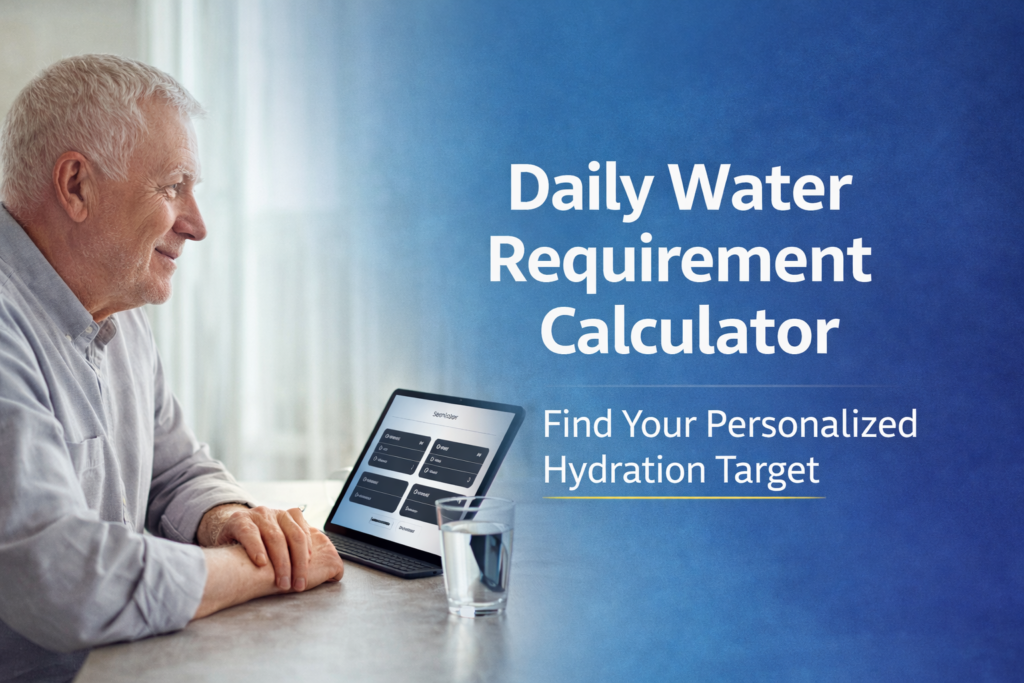
Staying properly hydrated becomes more important with time. The body’s ability to regulate fluids changes, thirst signals may not feel as strong, and certain medications can influence how much water you actually need. That’s why guessing isn’t always helpful. A personalized hydration target can give you a clearer direction.
This Daily Water Requirement Calculator is designed specifically for adults over 60. Instead of offering a generic recommendation, it considers your weight, activity level, and climate exposure to estimate a daily water goal that better fits your routine.
Hydration is not about drinking as much as possible. It is about drinking the right amount for your body.
Daily Water Requirement Calculator
Estimate a daily hydration target based on weight, activity, and climate — then get a simple schedule you can actually follow.
Why Hydration Needs Change After 60
As the years go by, total body water percentage gradually decreases. Kidney efficiency may shift, and medications such as diuretics can influence fluid balance. Many older adults also report that they simply do not feel thirsty as often as they once did.
This combination can make it easier to fall slightly behind on fluids without realizing it. Mild dehydration may contribute to fatigue, constipation, dizziness, or dry mouth. More significant fluid imbalance can affect concentration and physical comfort.
A structured daily target helps remove uncertainty.
How This Calculator Works
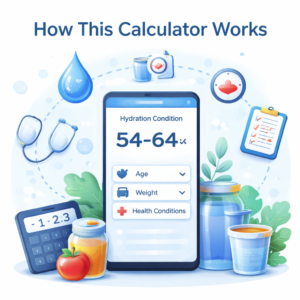
This tool uses a widely accepted starting formula based on body weight. From there, it adjusts for lifestyle factors that influence fluid needs.
You enter:
• Your weight in pounds
• Your activity level
• Your climate or heat exposure
• Optional daily habits like caffeine or alcohol
• Important health notes such as diuretics or fluid restrictions
The calculator then provides:
• Total daily ounces
• Cups equivalent
• Liters equivalent
• Bottle comparisons
• A practical hydration schedule for morning, midday, afternoon, and evening
This approach keeps the number practical rather than abstract.
Why Activity and Climate Matter
Movement increases fluid loss through breathing and perspiration. Even light activity can raise fluid needs modestly. Warmer environments also increase insensible water loss, especially in humid climates.
Rather than adding arbitrary large amounts, this calculator makes conservative adjustments so the goal remains realistic and safe for most older adults.
Hydration should support your day, not overwhelm it.
The Importance of Health Conditions
Fluid intake is not one-size-fits-all. Some individuals are advised to limit fluids due to heart failure, kidney disease, or dialysis. Others may take diuretics, sometimes called “water pills,” which influence fluid balance.
This calculator includes safety prompts to remind you that medical guidance always takes priority. If you have been instructed to restrict fluids, follow your clinician’s recommendations rather than a general formula.
The tool provides guidance — not medical direction.
Turning Your Target Into a Routine
Knowing your number is only the first step. Consistency matters more than perfection.
The calculator divides your daily goal into manageable portions:
Morning
Midday
Afternoon
Evening
Spacing fluids earlier in the day may reduce nighttime bathroom trips while still helping you reach your goal. Many adults find that pairing water with existing habits — such as meals, medication times, or walks — makes hydration feel natural rather than forced.
If you would like to track your progress throughout the day, you can also use our Daily Hydration Tracker to log each glass and monitor your intake visually. Our best hydration drinks seniors should consider is also available.
What Counts Toward Hydration?
Water is the foundation. However, fluids from herbal teas, diluted fruit juices, milk, and water-rich foods also contribute to total intake. Electrolyte beverages may help in certain situations, particularly during heat or increased activity, but low-sugar options are generally preferred.
Coffee and alcohol can contribute some fluid, but they should not be relied upon as primary hydration sources.
Balance and moderation are key.
Signs You May Need More Fluids
Even with a calculated goal, it helps to listen to your body. Signs of mild dehydration may include:
• Darker yellow urine
• Dry lips or mouth
• Headache
• Feeling unusually tired
• Lightheadedness when standing
If symptoms persist or feel severe, medical attention is important. Hydration should improve comfort, not create uncertainty.
Why This Tool Is Different
Many hydration calculators online are built for athletes or younger adults. This tool was created with older adults in mind. It includes safety prompts, moderate adjustment ranges, and realistic scheduling.
It is meant to support daily wellness, not push extreme intake levels.
A calm, structured approach tends to work best.
Building Better Hydration Habits
Reaching your hydration target does not require drastic change. Small adjustments can make a meaningful difference.
Keeping a reusable bottle nearby increases awareness. Using a marked bottle allows you to see progress. Drinking a glass with each meal builds consistency. Adjusting intake earlier in the day can support restful sleep.
Hydration works best when it blends into your lifestyle rather than competing with it.
Final Thoughts
Proper hydration supports energy, digestion, circulation, and overall comfort. It also plays a role in maintaining cognitive clarity and physical stability.
This Daily Water Requirement Calculator offers a personalized starting point based on factors that genuinely matter. Use it as a guide, monitor how you feel, and adjust thoughtfully if needed.
For ongoing consistency, consider pairing your daily target with a hydration tracker so you can stay on course with confidence.
Frequently Asked Questions
How much water should seniors drink each day?
Fluid needs vary based on weight, activity level, climate, and health conditions. Many older adults benefit from a structured daily target rather than guessing. This calculator estimates a personalized goal to support consistent hydration.
Does coffee count toward daily hydration?
Coffee does contribute fluid, but caffeine may slightly increase urine output in some individuals. It’s best to balance caffeinated beverages with plain water or low-sugar hydration options.
What if I take diuretics or have heart or kidney issues?
If you have been advised to restrict fluids or take medications that affect fluid balance, follow your clinician’s recommendations. This calculator provides general guidance and should not override medical advice.
Is it possible to drink too much water?
Yes. Excessive water intake in a short period can dilute electrolytes. That’s why steady intake throughout the day is recommended rather than consuming large amounts at once.
Should I drink more water in hot weather?
Warmer temperatures and increased activity can raise fluid needs. This tool adjusts slightly for climate to provide a more realistic daily hydration target.
Medical Disclaimer
This tool provides general hydration guidance for informational purposes only. Individual fluid needs can vary based on health conditions, medications, and clinical advice. Always follow guidance from your healthcare provider, especially if you have been advised to limit fluids.