Phone calls used to be simple. You picked up the receiver, talked, listened, and hung up. But for many older adults, hearing changes make conversations harder than they should be. Words get muffled. Background noise interferes. Important details get missed.
That’s where captioned telephones come in.
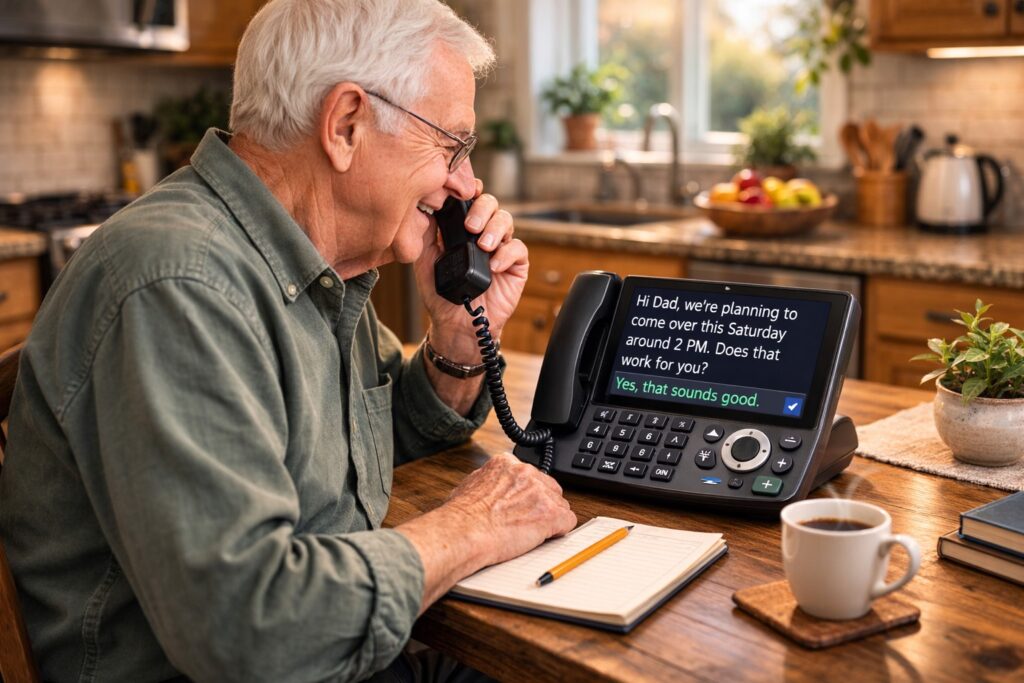
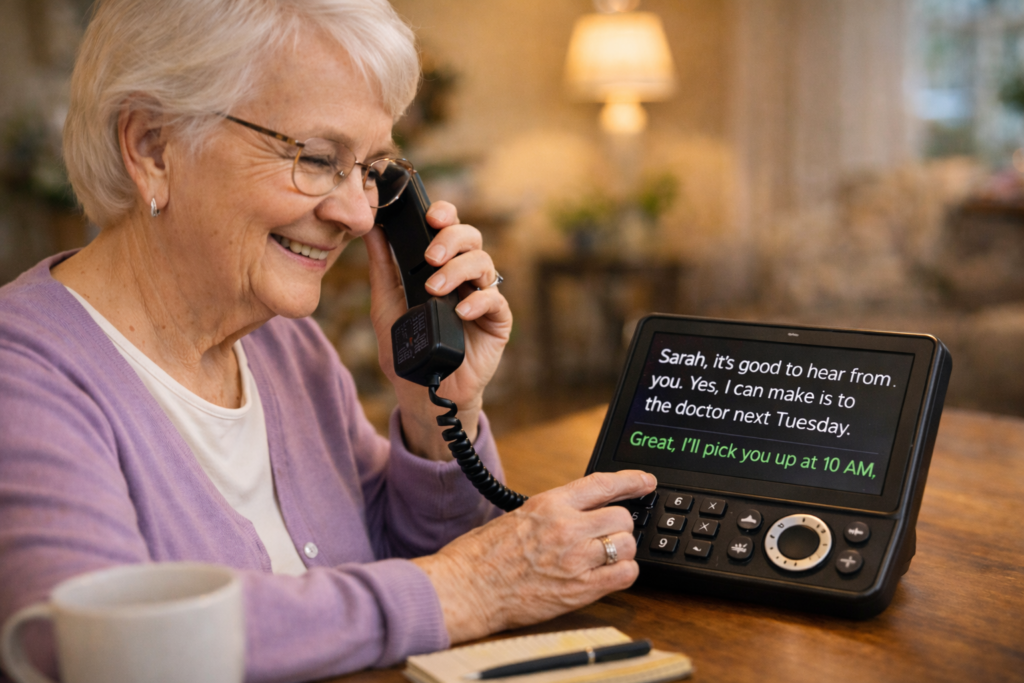
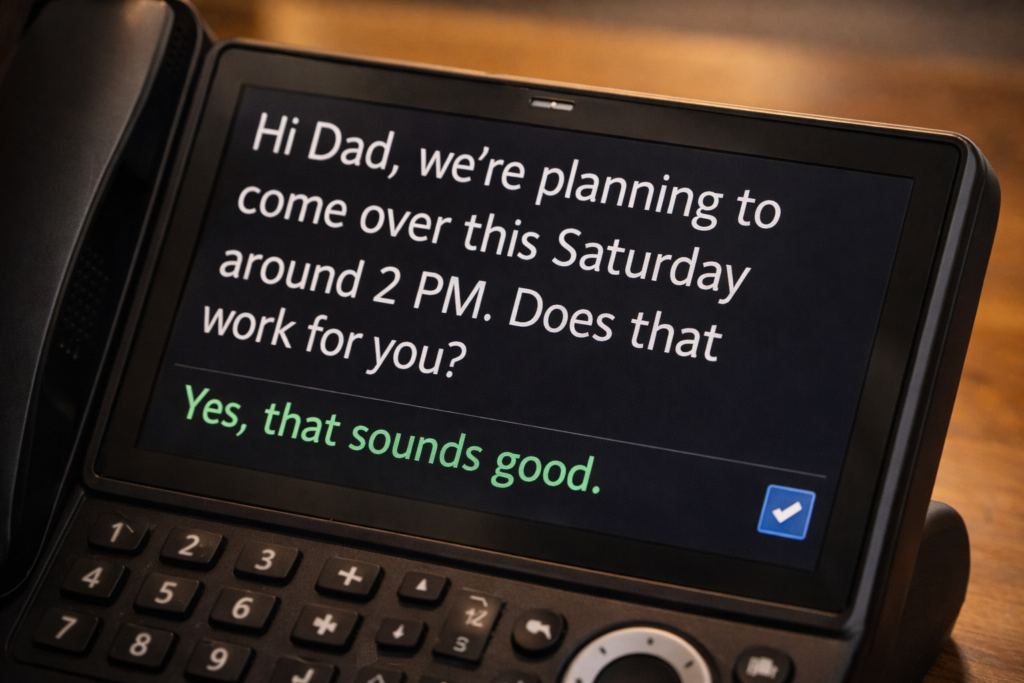
A captioned telephone allows you to hear the caller while also reading what they are saying on a built-in screen. It works much like television captions, but in real time during your phone conversation. You speak normally. You listen normally. And you read along if you miss something.
For many seniors, this technology restores confidence and independence almost immediately.
What Is a Captioned Telephone?
A captioned telephone is a specialized phone designed for individuals with hearing loss. It displays live captions of the caller’s spoken words on a screen while the conversation is happening.
You do not type.
You do not text.
You simply talk and listen as usual.
The captions appear automatically so you can follow along if audio clarity becomes difficult.
This is especially helpful when:
• The caller speaks quickly
• The caller has an accent
• There is background noise
• Medical or financial information needs to be understood precisely
Instead of asking someone to repeat themselves multiple times, you can glance at the screen and continue the conversation naturally.
How Does a Captioned Phone Work?
Captioned telephones use one of two main technologies.
The first method involves a secure captioning service. When the other person speaks, their voice is processed through advanced speech recognition systems (sometimes with human-assisted accuracy monitoring), and the text appears on your phone’s screen within seconds.
The second method uses fully automated speech recognition software without live assistance. These systems have improved significantly and are designed to be fast and accurate.
In both cases, privacy regulations are strict. Captioning services are federally regulated and required to maintain confidentiality.
You experience it as one seamless conversation.
Who Should Consider a Captioned Telephone?
This technology is ideal for:
• Adults with moderate to severe hearing loss
• Individuals who rely heavily on speakerphone
• People who frequently ask others to repeat themselves
• Seniors who avoid phone calls because of frustration
• Anyone who struggles to understand important instructions over the phone
If phone calls have become stressful or exhausting, captioned telephones can reduce that mental strain.
What Features Should Seniors Look For?
Not all captioned phones are designed equally. When choosing a model, look for features that prioritize comfort and clarity.
Large Display Screen
The text should be easy to read without squinting. Adjustable font size is important.
Volume Amplification
Many models also increase call volume, which helps even if you read captions.
Simple Controls
Buttons should be clearly labeled and easy to press. Touchscreen models should have large icons.
Adjustable Caption Speed
Some phones allow you to review previous text if needed.
Built-In Answering Machine
Helpful for reviewing missed calls.
A good captioned phone should feel intuitive — not complicated.

- Unmatched Accessibility and Convenience: Hamilton CapTel empowers people with hearing loss…
- REQUIREMENTS: 1) High-Speed internet (Ethernet cable or Wi-Fi). 2) Telephone Service – Can…
- Customized Communication for people who are Hard of Hearing: Enjoy the intuitive interface…
- 24/7 Nationwide Captioning Service, available at no cost. Experience the freedom of…
- Unmatched Accessibility and Convenience: Hamilton CapTel empowers people with hearing loss…
- REQUIREMENTS: 1) High-Speed internet (Ethernet cable or Wi-Fi). 2) Telephone Service – Can…
- Customized Communication for people who are Hard of Hearing: Enjoy the intuitive interface…
- 24/7 Nationwide Captioning Service, available at no cost. Experience the freedom of…

- Unmatched Accessibility and Convenience: Hamilton CapTel empowers people with hearing loss…
- REQUIREMENTS: 1) High-Speed internet (Ethernet cable or Wi-Fi). 2) Telephone Service – Can…
- Customized Communication for people who are Hard of Hearing: Enjoy the intuitive interface…
- 24/7 Nationwide Captioning Service, available at no cost. Experience the freedom of…
Are Captioned Telephones Free?
Many captioned telephones are available at no cost to qualified individuals.
Under the Americans with Disabilities Act (ADA), telecommunications relay services are funded to support individuals with hearing loss. If you certify that you have difficulty hearing on the phone, you may qualify for a captioned phone and service at no charge.
However, keep in mind:
• Internet may be required for certain models
• You must self-certify hearing loss
• Setup requirements vary
Always confirm eligibility through the provider.
Do You Need Internet Service?
Some captioned phones operate using traditional landlines. Others require high-speed internet to deliver captions quickly and accurately.
Internet-based models often offer clearer displays and faster text generation. If you already have Wi-Fi at home, setup is typically straightforward.
If you do not use internet at home, a landline-compatible option may be better.
Captioned Phones vs. Amplified Phones
An amplified phone increases sound volume.
A captioned phone provides visual text support in addition to sound.
If turning the volume up still leaves you missing words, captions may offer a more reliable solution.
Many seniors find that combining hearing aids with captioning provides the most comfortable experience.
Benefits Beyond Hearing
Captioned telephones are not just about convenience. They provide peace of mind.
You can clearly confirm:
• Doctor’s instructions
• Medication details
• Appointment times
• Bank or insurance information
• Emergency updates
Miscommunication in these areas can be stressful. Captioning reduces that risk.
Family members also appreciate knowing that conversations are understood clearly.
Are Conversations Private?
Yes.
Captioned telephone services are required by federal law to protect confidentiality. Conversations are not recorded or stored. Operators and systems must follow strict privacy guidelines.
This ensures your calls remain secure.
Potential Downsides to Consider
While helpful, captioned phones are not perfect for everyone.
There may be a slight delay before captions appear.
Internet-based models depend on a stable connection.
They are less portable than smartphones.
Some touchscreen versions require brief adjustment.
Most seniors adapt quickly, especially when the benefit outweighs the inconvenience.
Final Thoughts
Captioned telephones represent one of the most practical assistive technologies available for older adults experiencing hearing challenges.
They restore confidence.
They reduce frustration.
They protect independence.
If phone calls have become something you avoid rather than enjoy, this technology may dramatically improve daily communication.
In the larger world of assistive technology for seniors, few tools offer such immediate and noticeable impact.
Frequently Asked Questions
1. Do I need to have severe hearing loss to qualify for a captioned phone?
No. You do not need to have severe hearing loss. If you have difficulty hearing clearly during phone conversations and rely on captions to understand speech, you may qualify. Most providers require a simple self-certification confirming that hearing challenges affect your ability to use a standard phone.
2. Are captioned telephones really free?
In many cases, yes. Captioned telephone services are funded through a federal telecommunications relay program under the Americans with Disabilities Act (ADA). Qualified users can often receive the phone and captioning service at no cost. Internet service, however, is typically the user’s responsibility.
3. Do captioned phones work with hearing aids?
Yes. Captioned telephones are compatible with most hearing aids. Many models also include volume amplification and adjustable tone settings, which can improve clarity even further. The combination of hearing aids and captions often provides the best communication support.
4. Is there a delay when captions appear?
There may be a slight delay of one to several seconds while speech is processed into text. However, modern captioning technology is fast and designed to feel natural during conversation. Most users adjust quickly and find the delay minimal.
5. Do captioned telephones require internet service?
Some models require high-speed internet to deliver captions, while others can operate using traditional landlines. Internet-based models typically provide faster and more accurate captioning. It’s important to confirm requirements before choosing a device.
6. Are my phone conversations private?
Yes. Captioned telephone services are federally regulated and required to maintain strict confidentiality. Conversations are not recorded or stored, and privacy protections are enforced by law.
7. What is the difference between a captioned phone and an amplified phone?
An amplified phone simply increases the volume of the caller’s voice. A captioned phone displays written text of what the caller says in real time. If volume alone does not solve communication issues, captioning often provides a more reliable solution.