
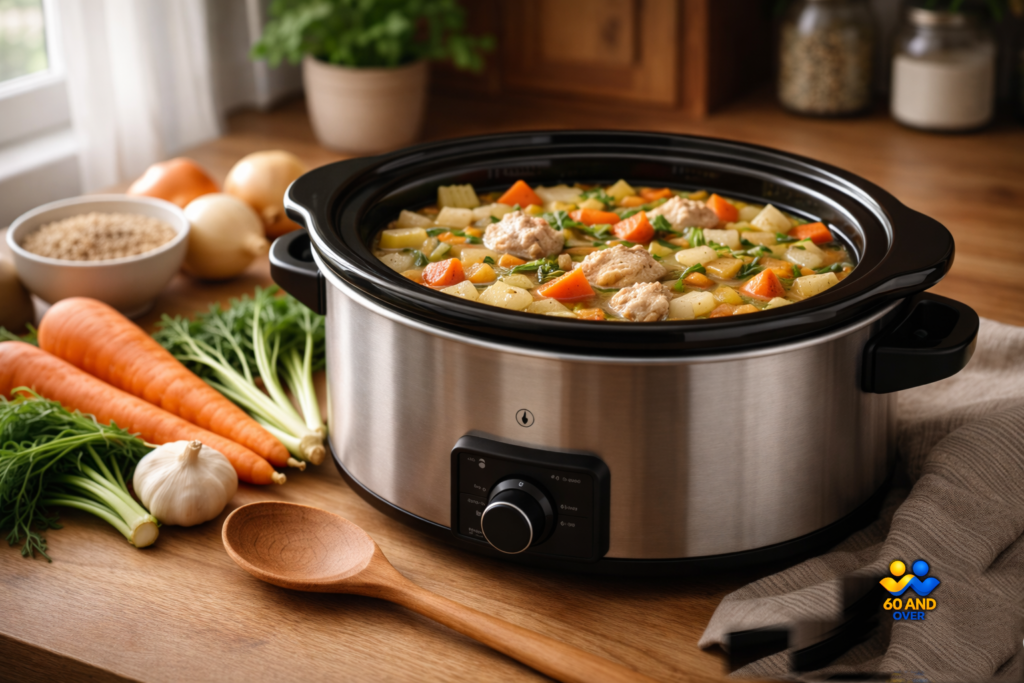
Cooking after 60 should feel doable, comforting, and financially realistic. Many older adults want meals that are easy to prepare, gentle on the heart, and steady on a grocery budget. A slow cooker can help with all of that at once.
Crock Pot meals reduce time spent standing at the counter. They soften foods so meals can be easier to chew. They also help you stay in control of ingredients, especially sodium. That matters because a lot of “convenient” foods hide salt in broths, sauces, seasoning packets, deli meats, and frozen meals. When you cook at home, you decide what goes in the pot.
Slow cooking also builds flavor naturally. Over several hours, onions, garlic, herbs, vegetables, and proteins become richer tasting without needing heavy salt. That makes the slow cooker a strong choice for seniors who are trying to support heart health, manage blood pressure, reduce swelling, or simply feel more steady day to day.
This guide includes budget-friendly Crock Pot meals that work well for older adults, plus simple recipes you can actually follow without turning cooking into a project.
What Makes a Crock Pot Meal Budget-Friendly and Heart-Supportive
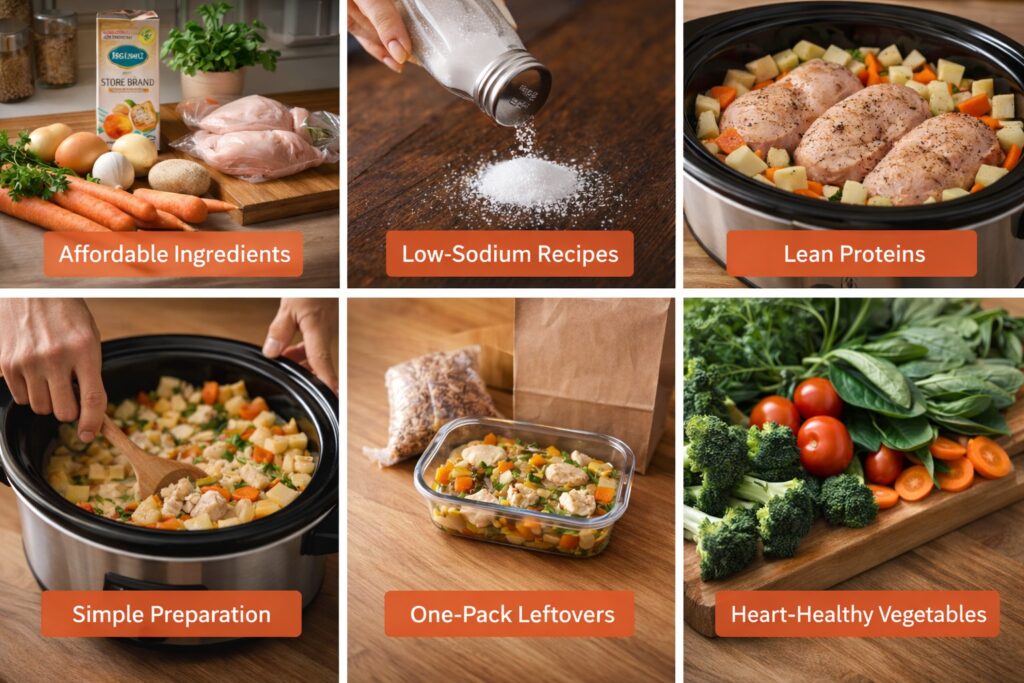
A meal can be inexpensive and still feel satisfying when it includes three things: fiber, protein, and smart seasoning.
Fiber helps you feel full and supports digestion. Protein supports strength and steady energy. Smart seasoning helps you avoid salt-based shortcuts while still enjoying flavor. When these three are in place, it becomes easier to stay consistent, and consistency is what moves the needle.
You do not need perfect meals. You need reliable meals.
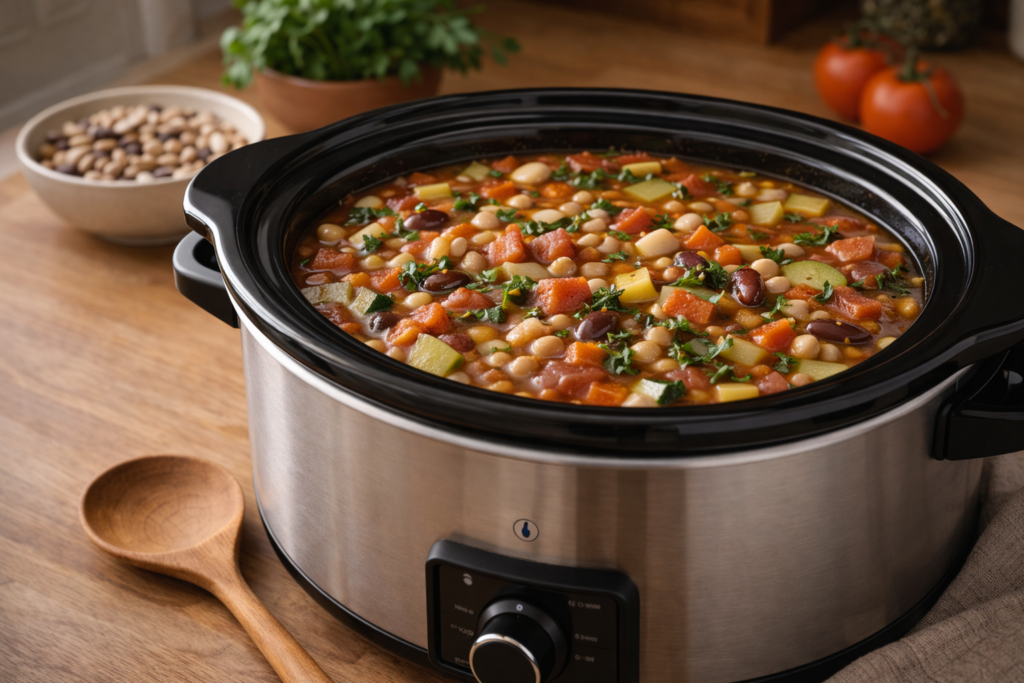
Slow Cooker Vegetable and Bean Soup
This is one of the most budget-friendly meals you can make, and it fits heart-conscious eating extremely well. Beans are inexpensive, filling, and naturally rich in fiber. When seniors say they feel “hungry again too fast,” it is often because meals are too light on fiber and protein. This soup solves that without requiring expensive ingredients.
Another reason this recipe works well is control. Store-bought canned soups often contain a surprising amount of sodium, even when they seem “healthy.” Making your own soup with no-salt-added tomatoes and low-sodium broth keeps the flavor while giving you real control over what you are eating.
This soup also gets softer as it cooks, which can be a relief for anyone who prefers gentler textures. If you want it even softer, you can cook it longer and lightly mash part of the soup before serving.
Ingredients
- 2 cans no-salt-added beans (black beans or kidney beans), rinsed
- 1 can no-salt-added diced tomatoes
- 1 cup chopped carrots
- 1 cup chopped celery
- 1 small onion, diced
- 2 cloves garlic, minced
- 4 cups low-sodium vegetable broth
- 1 teaspoon dried thyme
- 1 bay leaf
- Black pepper to taste
Instructions
- Add all ingredients to the slow cooker and stir gently.
- Cook on low for 6–8 hours or on high for 3–4 hours.
- Remove the bay leaf before serving.
- If you prefer a thicker soup, lightly mash a small portion and stir it back in.
Estimated cost per serving: about $1.25–$1.75
Estimated sodium per serving: typically 250–350 mg, depending on broth and beans
Storage: refrigerate up to 4 days, freeze up to 2–3 months
Budget-friendly tip: Dried beans are even cheaper than canned. If you have the energy to soak them overnight, you can stretch this recipe further.
Heart-friendly tip: Rinsing canned beans can noticeably reduce sodium without changing the meal.
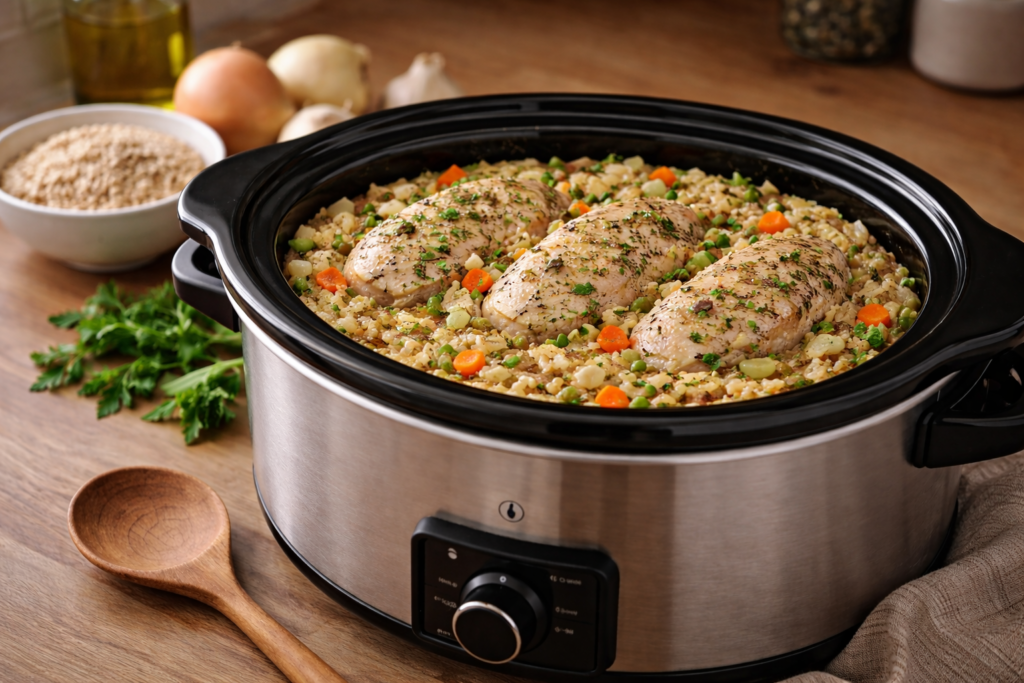
Crock Pot Chicken and Brown Rice
This is a steady, filling meal that works well when you want something reliable for the week. Chicken supports strength and energy. Brown rice adds fiber, which helps meals feel lasting. Frozen vegetables keep the cost reasonable and make it easy to add nutrition without additional chopping.
A common reason seniors struggle with low-sodium eating is that meals can feel bland when salt-based shortcuts are removed. This recipe solves that by building flavor slowly. Garlic, onion, herbs, and the long cook time do the heavy lifting. If you want a brighter taste without adding salt, a squeeze of lemon at the end helps a lot.
This is also a smart “cook once, eat twice” option. Leftovers reheat well and often taste even better the next day.
Ingredients
- 1 pound boneless skinless chicken thighs or breasts
- 1 cup uncooked brown rice
- 2 cups low-sodium chicken broth
- 1 cup frozen mixed vegetables
- 1 clove garlic, minced
- 1 teaspoon dried parsley (or Italian herb blend without salt)
- Black pepper to taste
Instructions
- Add brown rice and broth to the slow cooker first.
- Stir in the frozen vegetables and garlic.
- Place chicken on top and sprinkle with herbs and pepper.
- Cook on low for 6–7 hours, until rice is tender and chicken is fully cooked.
- Shred chicken slightly and stir before serving if you like a more blended texture.
Estimated cost per serving: about $2.00–$2.75
Estimated sodium per serving: typically 300–450 mg, depending on broth and portions
Storage: refrigerate up to 4 days, freeze up to 2 months
Budget-friendly tip: Chicken thighs are often less expensive and stay tender in a slow cooker.
Heart-friendly tip: Avoid pre-seasoned chicken products and seasoning packets, which are usually where the sodium sneaks in.
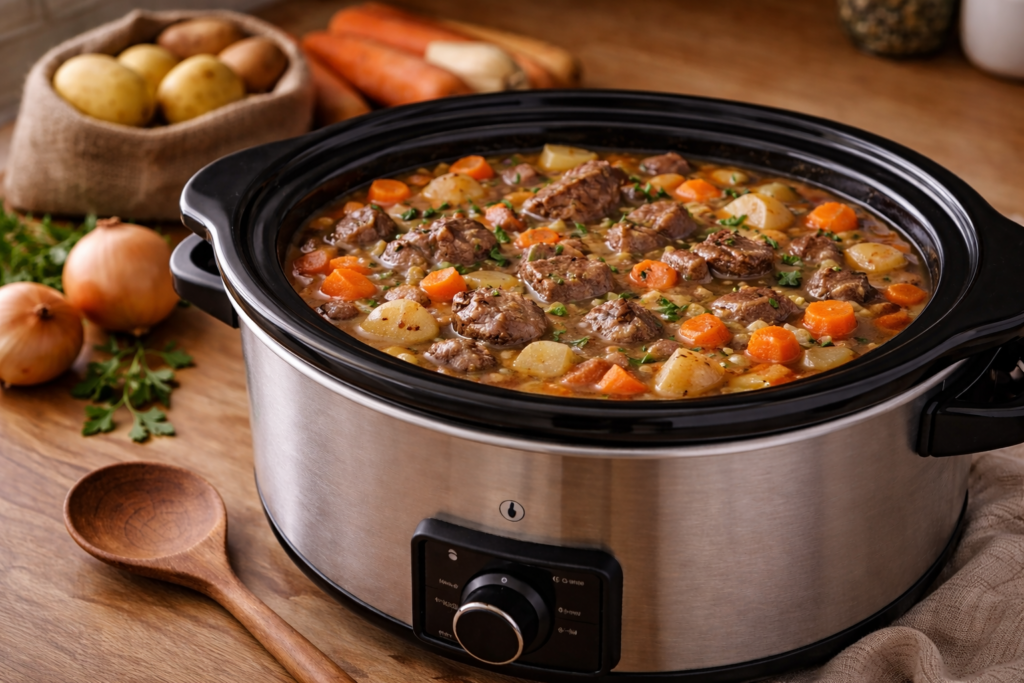
Budget Beef and Root Vegetable Stew
A slow cooker is one of the best ways to make beef affordable. Tougher cuts can be cheaper, and slow cooking tenderizes them over time. Root vegetables like potatoes and carrots stretch the meal and make it feel traditional and satisfying.
This meal also fits seniors who want comfort food but still want to be mindful. The key is broth choice. Regular broths can be high in sodium, so using low-sodium broth makes a major difference. Rosemary and thyme give the stew that deep “home cooked” flavor without relying on salt.
If you want a softer texture, cook it longer. Stews tend to become more tender and easier to eat after an extra hour on low.
Ingredients
- 1 pound lean stew beef
- 2 potatoes, cubed
- 2 carrots, sliced
- 1 small onion, chopped
- 3 cups low-sodium beef broth
- 1 teaspoon dried rosemary
- 1 teaspoon dried thyme
- Black pepper to taste
Instructions
- Add beef and vegetables to the slow cooker.
- Pour broth over the top and add herbs and pepper.
- Cook on low for 7–8 hours, until beef is tender.
- Stir before serving. If you prefer a thicker stew, mash a few potatoes into the broth.
Estimated cost per serving: about $2.50–$3.25
Estimated sodium per serving: typically 350–500 mg, depending on broth
Storage: refrigerate up to 4 days, freeze up to 2–3 months
Budget-friendly tip: Buying stew meat in a larger pack and freezing portions can lower your cost per serving.
Heart-friendly tip: Taste before adding anything extra. Slow cooking intensifies flavor naturally.
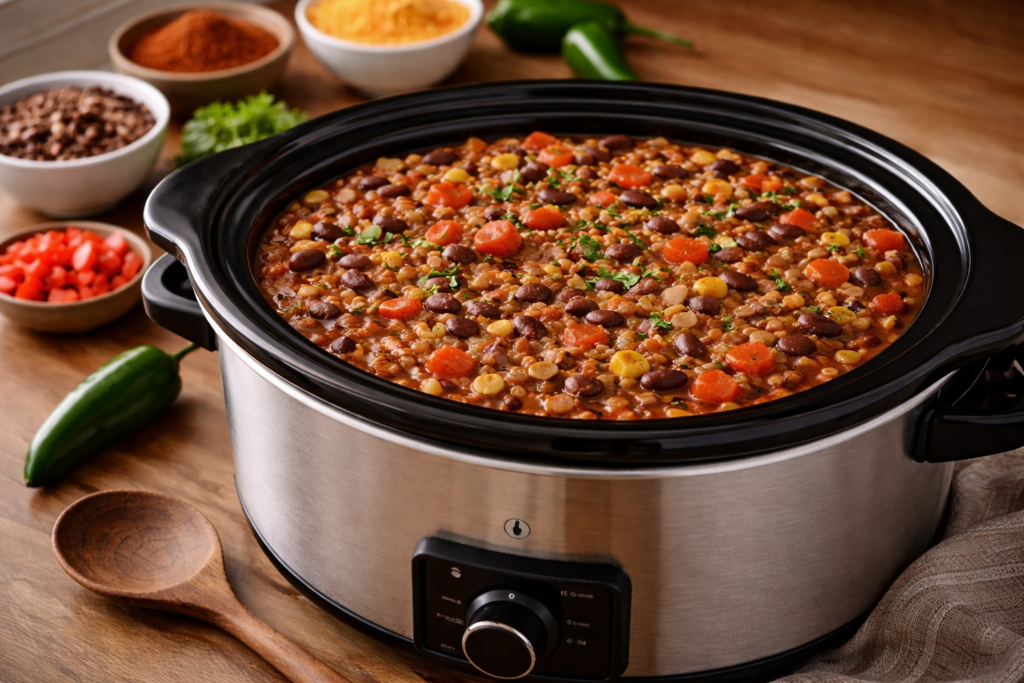
Slow Cooker Lentil Chili
Lentils are one of the best “value foods” you can keep in your pantry. They are inexpensive, shelf-stable, and high in fiber. They also provide plant-based protein that helps you feel full without relying on processed foods.
This chili is a strong option for seniors who want a hearty meal but want to keep sodium under control. The biggest sodium trap with chili is seasoning packets and salty canned ingredients. Using no-salt-added tomatoes and a low-sodium seasoning blend gives you the chili flavor without the heavy salt.
If you want more depth, add extra garlic and a small pinch of smoked paprika. You get a richer taste without needing sodium.
Ingredients
- 1 cup dried lentils, rinsed
- 1 can no-salt-added diced tomatoes
- 1 bell pepper, chopped
- 1 small onion, diced
- 2 cups low-sodium vegetable broth
- 1 teaspoon chili powder (choose a low-sodium blend if possible)
- 1 teaspoon cumin
- Black pepper to taste
Instructions
- Add everything to the slow cooker and stir.
- Cook on low for 6–7 hours, until lentils are tender.
- If it becomes too thick, add a bit more broth and stir.
Estimated cost per serving: about $1.25–$1.75
Estimated sodium per serving: typically 200–350 mg, depending on broth and tomatoes
Storage: refrigerate up to 4 days, freeze up to 3 months
Budget-friendly tip: Lentils require no soaking and cook easily, which saves time and effort.
Heart-friendly tip: Skip seasoning packets. Build flavor with cumin, garlic, onion, and pepper instead.
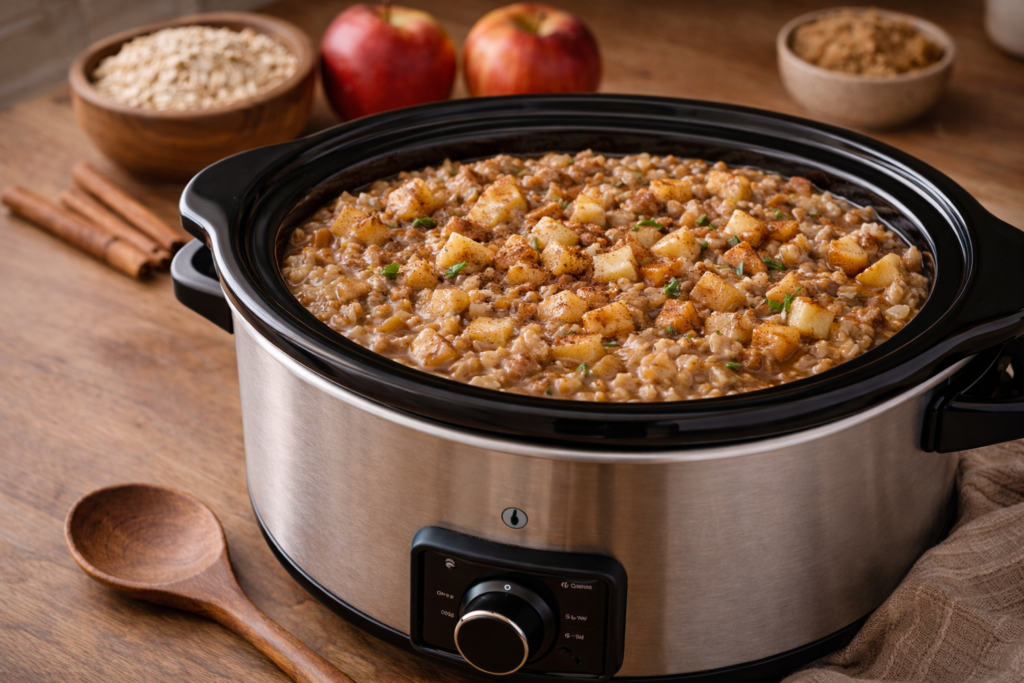
Crock Pot Apple Cinnamon Oatmeal
This is one of the easiest ways to make breakfast feel warm and satisfying without spending extra money on packaged options. Steel-cut oats are affordable, last a long time in the pantry, and provide soluble fiber that supports healthy cholesterol levels. Apples and cinnamon add sweetness and flavor naturally, so you don’t have to rely on sugary mixes.
This is also a “set it and forget it” meal that supports routine. Many seniors do best with predictable breakfast habits, and this makes mornings easier. You can portion leftovers into containers and reheat them in minutes for the next few days.
One helpful detail for heart-conscious readers is that homemade oatmeal like this typically avoids the hidden sodium and sugar found in many instant packets. It is a small change that can add up when repeated several mornings a week.
Ingredients
- 1 cup steel-cut oats
- 3 cups water or unsweetened almond milk
- 1 apple, diced
- 1 teaspoon cinnamon
- 1 tablespoon chopped walnuts (optional)
Instructions
- Lightly coat the slow cooker with cooking spray.
- Add all ingredients except walnuts.
- Cook on low for 6–7 hours. Overnight works well.
- Stir before serving and top with walnuts if desired.
Estimated cost per serving: about $0.75–$1.25
Estimated sodium per serving: typically 50–100 mg, depending on the milk used
Storage: refrigerate up to 4 days, freeze in individual portions up to 2 months
Budget-friendly tip: Buying oats in bulk is usually far cheaper than single-serve packets.
Heart-friendly tip: If you use almond milk, choose an unsweetened variety and check the label for sodium.
Simple Ways to Make Crock Pot Cooking Even Easier
The slow cooker helps, but the real magic is preparation that reduces daily effort. When seniors stay consistent with food, it is usually because the plan is easy to repeat.
Choose two recipes per week instead of five if that feels better. Cook one early in the week and one later in the week. Use frozen vegetables when chopping feels like too much. Keep a small set of seasoning staples that are not salt-based, such as garlic powder, onion powder, pepper, cumin, rosemary, thyme, and cinnamon.
If you want stronger flavor without salt, lemon juice and vinegar are two of the simplest upgrades. They brighten food and make meals taste “finished.”
A Realistic Weekly Grocery Budget
Budgets vary by region, but using store-brand ingredients, many seniors can make a week of slow cooker meals in the range of about $40–$65. That range depends on protein costs, whether you use dried beans and lentils, and how much produce you buy fresh versus frozen.
The bigger savings often come from leftovers. Many of these meals make enough for multiple servings. That reduces the number of times you have to cook and lowers the temptation to buy takeout.
Food Safety and Storage Tips
Food safety matters, especially for older adults.
Let hot food cool slightly before refrigerating, but do not leave it out for long periods. Store leftovers in shallow containers to cool evenly. Most cooked meals keep well in the refrigerator for up to 3–4 days. If you will not eat it within that time, freeze it.
When reheating, make sure food is steaming hot. If something smells off or looks questionable, it is not worth the risk.
Who These Meals Are Best For
These recipes tend to be especially helpful for:
- Older adults who want to spend less time cooking
- Seniors trying to reduce sodium
- Anyone watching grocery spending
- People who want softer, more comfortable meals
- Older adults who prefer cooking once and eating multiple times
If you have kidney disease, heart failure, or strict sodium instructions from your doctor, follow your personal medical guidance before changing your diet.
Final Thoughts
Budget-friendly Crock Pot meals are one of the most practical tools seniors can use to support heart health and keep grocery spending under control. Slow cooking makes meals softer, simpler, and easier to repeat. It also helps you avoid hidden sodium by letting flavor come from real ingredients, not processed shortcuts.
You do not need complicated recipes to eat well. You need repeatable meals that fit your life.
Important Health Disclaimer
This content is for educational and informational purposes only and is not medical advice. Nutrition needs vary based on medications, heart conditions, kidney function, and individual health history. Consult your healthcare provider before making major dietary changes, especially if you have heart failure, kidney disease, diabetes, or sodium restrictions.
Frequently Asked Questions
Are Crock Pot meals good for seniors?
Yes. Slow cookers reduce active cooking time, soften foods, and make it easier to batch cook. Many seniors find this helps them stay consistent with meals while reducing reliance on processed foods.
Are these recipes low sodium?
They are designed to be low-sodium friendly by using low-sodium broth, no-salt-added tomatoes, and seasoning without salt-based packets. Sodium totals still depend on labels and portions.
How can I add flavor without salt?
Use garlic, onion, pepper, herbs, lemon juice, vinegar, cumin, rosemary, thyme, and paprika. These build flavor without relying on sodium-heavy sauces.
Can I freeze these meals?
Yes. Soup, stew, and chili freeze well. Portion meals into containers, label them with the date, and use within 2–3 months for best quality.
How long can leftovers stay in the refrigerator?
Most cooked meals are best used within 3–4 days when refrigerated properly. If you will not eat it within that window, freezing is a safer option.
Make Healthy Cooking Even Easier
Not all slow cookers are created equal. If you’re building heart-healthy habits, using a model designed for simplicity and safety can reduce stress in the kitchen.