
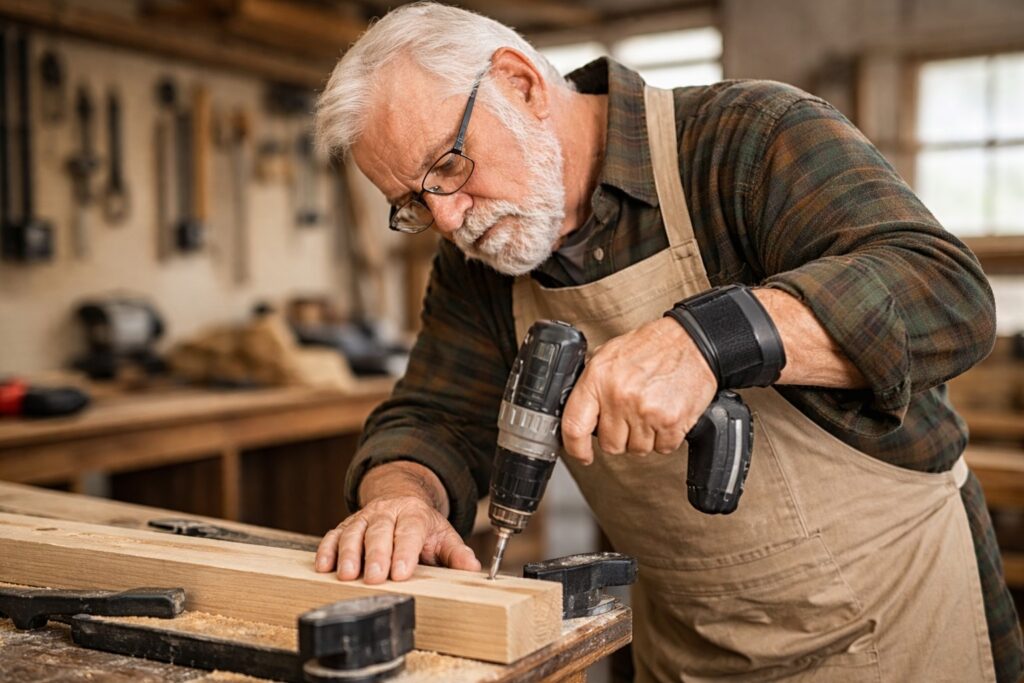
For many seniors, woodworking doesn’t become difficult because of loss of interest — it becomes challenging because of hand or wrist pain. Arthritis, stiffness, reduced grip strength, or lingering injuries can make tools that once felt manageable suddenly feel uncomfortable or risky.
When pain enters the picture, safety changes. Discomfort affects grip, focus, and reaction time, increasing the chance that a small slip becomes a serious injury.
This article explains how hand and wrist pain changes woodworking risk, what tool behaviors tend to aggravate discomfort, and which design characteristics often make woodworking more manageable for seniors.
Why Hand and Wrist Pain Increases Injury Risk
Pain rarely exists in isolation. When hands or wrists hurt, people tend to:
- Adjust grip unconsciously
- Apply uneven pressure
- Lose fine motor control
- Fatigue faster
- Hesitate during cuts
These changes can reduce precision and control — especially when tools vibrate, twist suddenly, or require sustained force.
For seniors, the goal is not to “push through” pain, but to reduce strain so control remains consistent.
What “Pain-Friendly” Woodworking Really Means
Woodworking tools do not need to be painful to be effective. Tools that are more manageable for seniors with hand or wrist pain usually share several traits:
- Lower vibration
- Reduced torque
- Balanced weight
- Comfortable grip shape
- Adjustable speed or clutch
- Minimal force required to guide material
Pain-friendly does not mean weak — it means less strain over time.
Tool Behaviors That Often Aggravate Pain
Certain tool behaviors consistently increase discomfort — and over time, risk — for seniors dealing with hand or wrist pain. These behaviors don’t just cause soreness; they can quietly undermine control and confidence during woodworking tasks.
Understanding how tools behave is often more important than knowing how powerful they are.
High Vibration
High vibration is one of the most common contributors to hand and wrist discomfort. Repeated vibration can aggravate joint inflammation, increase stiffness, and reduce sensitivity in the hands. When sensitivity drops, it becomes harder to feel subtle warning signs, such as resistance changes or shifting material.
Over longer sessions, vibration also accelerates fatigue. As hands tire, grip becomes less consistent, and fine motor control declines. This combination can turn otherwise manageable tasks into higher-risk situations, especially when precision is required.
Sudden Torque or Twist
Tools that bind unexpectedly or produce sudden torque can place intense strain on the wrists. Even a brief twist can cause sharp pain or momentary loss of control, particularly for seniors with arthritis, reduced grip strength, or prior joint injuries.
What makes torque especially problematic is how fast it happens. There is often no time to react or reposition, which increases the chance of dropping the tool or misguiding it during a cut. Tools that twist suddenly demand strong, stable wrists — something that cannot always be relied upon as joints age.
Force-Dependent Cutting
Tools that require sustained pushing or pulling force place continuous stress on the hands and wrists. Over time, this effort compounds fatigue, leading to stiffness, soreness, and reduced precision.
Force-dependent cutting also encourages compensating behaviors, such as gripping harder or changing wrist angle, which can further aggravate pain. For seniors, tools that rely on steady guidance rather than forceful input are generally more manageable and less tiring during longer projects.
Tool Designs That Tend to Be Easier on Hands and Wrists
No woodworking tool eliminates pain entirely, but certain design characteristics consistently reduce strain and help seniors maintain steadier control. These designs aim to support the hands rather than challenge them.
Choosing tools that work with the body — not against it — is often the key to continuing woodworking comfortably.
Slower, Predictable Cutting Motion
Tools that operate at a slower, predictable pace allow hands to remain relaxed rather than braced for sudden movement. Predictable motion reduces the need for tight grip pressure and makes it easier to guide material smoothly.
This steadiness helps prevent the micro-adjustments that strain joints over time. Seniors often find that slower tools provide more confidence, cleaner results, and less post-project soreness.
Adjustable Speed or Clutch Control
Adjustable speed settings and clutch controls allow seniors to limit how much force a tool can apply. When resistance increases or a tool binds slightly, these controls prevent sudden torque that can strain wrists.
Being able to tailor a tool’s behavior to the task — rather than forcing hands to adapt — reduces both discomfort and surprise movements. This feature is especially helpful for those managing arthritis or reduced joint stability.
Downward or Vertical Cutting
Cutting motions that move downward or vertically into the material typically require less grip force and provide better stability. These motions allow gravity and tool design to assist the cut, rather than relying on the user’s hands to restrain or guide aggressively.
For seniors with wrist pain, this can significantly reduce strain, particularly during repetitive or detailed work.
Stable Workpiece Support
When a workpiece is well-supported, hands can focus on guiding rather than holding or restraining material. Proper support reduces the need for strong grip pressure and minimizes awkward wrist angles.
Stable setups also reduce sudden shifts that force the hands to react quickly. For seniors, good support often makes the difference between a comfortable session and one that leads to lingering pain.
Why Fatigue Matters More Than Pain Alone
Pain increases risk — but fatigue compounds it.
As hands tire:
- Grip weakens
- Reaction time slows
- Mistakes become more likely
This is why shorter sessions, frequent breaks, and stopping at the first sign of worsening pain are critical safety decisions — not signs of giving up.
Adapting Woodworking Without Giving It Up
Many seniors continue woodworking comfortably by adjusting how they work:
- Choosing smaller or lighter projects
- Breaking tasks into shorter sessions
- Using clamps, jigs, and guides instead of grip force
- Avoiding tools that require sustained pressure
These adaptations preserve both enjoyment and safety.
When Pain Signals a Need to Pause or Change Approach
Woodworking may need modification when:
- Pain interferes with grip consistency
- Swelling or numbness develops
- Control feels unreliable
- Fatigue sets in quickly
In these moments, switching tasks, changing tools, or stopping entirely can prevent injury.
How This Article Fits Into the Series
This article focuses on physical comfort and joint strain, and supports:
- Safe Woodworking Tools for Seniors: What Actually Reduces Risk?
- Woodworking Tools for Seniors Who Want Control, Not Speed
- Cutting Tools for Seniors to Reduce Table Saw Injury Risk
Each article addresses a different factor that affects woodworking safety later in life.
Final Thoughts
Hand and wrist pain do not mean woodworking has to end. They mean woodworking needs to be adapted thoughtfully.
By choosing tools and methods that reduce strain, limit vibration, and support consistent control, many seniors continue woodworking comfortably and responsibly.
Listening to pain is not a setback — it’s a safety skill.
Frequently Asked Questions
Why does hand or wrist pain increase woodworking risk for seniors?
Pain can affect grip strength, sensitivity, and reaction time. When discomfort sets in, control becomes less consistent, increasing the chance of mistakes during cutting or guiding tasks.
Are certain tool behaviors more likely to aggravate joint pain?
Yes. High vibration, sudden torque, and force-dependent cutting often place extra strain on hands and wrists, especially during longer sessions.
Do slower woodworking tools help reduce hand strain?
Often, yes. Slower, predictable cutting motion allows hands to stay relaxed and reduces the need to brace against sudden force.
Why is adjustable speed or clutch control helpful for seniors with joint pain?
These features limit sudden torque and allow the tool’s behavior to be matched to the task, reducing unexpected strain on wrists and hands.
Can woodworking continue safely with hand or wrist pain?
In many cases, yes. Adapting tools, reducing vibration and force, taking breaks, and improving workpiece support can help seniors continue woodworking more comfortably.