
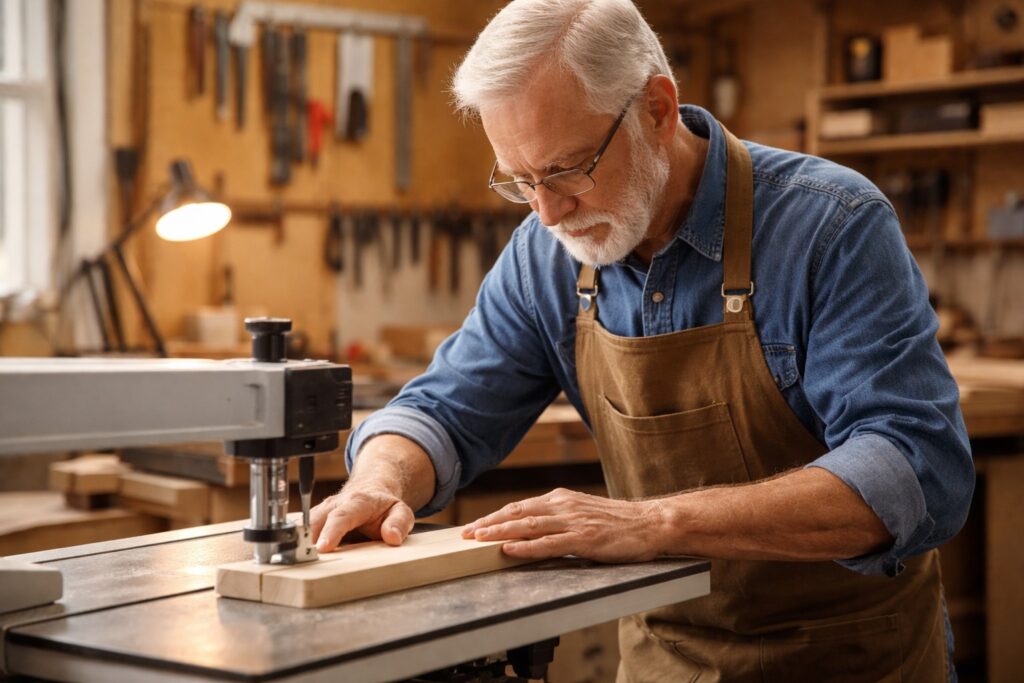
For many seniors, woodworking doesn’t stop because interest fades — it changes because control becomes more important than speed. Tasks that once felt routine can feel rushed or unforgiving when tools move faster than the hands guiding them.
When seniors look for woodworking tools that emphasize control, they are not trying to slow down creativity. They are trying to stay confident, accurate, and safe while continuing to enjoy the craft.
This article focuses on woodworking tool types and design features that support deliberate movement, predictable cutting, and better hand placement — not raw power or productivity.
Why Speed Becomes the Wrong Priority
High-speed woodworking tools leave very little room for correction. A small slip, hesitation, or misalignment can escalate quickly, especially when a tool pulls material aggressively or reacts instantly to pressure.
As reaction time and grip strength change, speed stops being an advantage and starts becoming a liability.
Seniors who continue woodworking safely tend to favor tools that:
- Respond predictably to input
- Move at a pace that allows correction
- Do not force the material through the cut
- Allow the user to pause, reposition, and continue
Control is not about weakness — it’s about intentional work.
What “Control” Actually Means in a Woodworking Tool
Control is often misunderstood. It does not mean underpowered or inefficient. For seniors, a controlled tool usually has:
- Slower or adjustable speed
- Minimal kickback or torque
- Downward or vertical cutting motion
- Clear visibility of the cutting area
- Stable workpiece support
- Hands positioned away from blades
These features reduce the chance that a small mistake turns into a serious injury.
Tool Types That Emphasize Control Over Speed
Some woodworking tools naturally support controlled work better than others. While no tool is risk-free, the following categories tend to allow deliberate movement and safer hand positioning.
Scroll Saws
Scroll saws move slowly and use a small, vertical blade. They allow precise cuts without force, making them well-suited for seniors who enjoy detail work, light projects, or seated operation.
Their biggest advantage is visibility and predictability. The blade moves only when guided, and pressure remains minimal.
Band Saws
Band saws cut downward and rarely throw material back toward the user. Compared to table saws, they allow better control over feed rate and hand distance.
Many seniors transition to band saws because they offer a balance between capability and safety — especially for curved or controlled cuts.
Hand Saws (Including Pull Saws)
Hand saws remain one of the most controlled cutting options available. Nothing moves unless the user moves it.
Pull-style hand saws, in particular, often require less force and allow better posture, which can reduce strain on hands, wrists, and shoulders.
Drills With Adjustable Clutch Control
Drills that allow torque adjustment give seniors the ability to prevent sudden wrist twist if a bit binds.
The ability to fine-tune resistance often matters more than raw drilling power.
Why Adjustable Speed Matters More Than Power
Tools with variable speed allow seniors to:
- Start cuts slowly
- Increase speed only when comfortable
- Match tool behavior to the material
- Pause without losing control
A slower start can prevent misalignment, slipping, or sudden force that leads to mistakes.
This is one reason seniors often avoid tools that operate only at high RPMs with no adjustment.
Visibility and Hand Placement Are Part of Control
Tools that block the cutting area or require hands close to blades increase risk, regardless of speed.
Controlled woodworking setups prioritize:
- Clear sightlines
- Proper lighting
- Guides, fences, and supports
- Push devices and clamps
Control is as much about where your hands are as how fast the blade moves.
When Control Replaces Efficiency — and That’s a Good Thing
Many seniors notice that projects take longer than they used to. That is not a failure — it’s an adaptation.
Slower progress often means:
- Fewer rushed decisions
- Cleaner cuts
- Less fatigue
- Fewer close calls
Woodworking remains satisfying when the pace matches the person doing the work.
When Faster Tools May No Longer Be the Right Choice
Tools that demand constant attention, quick reaction, or forceful feeding can become less forgiving over time.
This doesn’t mean abandoning woodworking — it means choosing tools and methods that support how you work now, not how you worked decades ago.
The goal is to keep woodworking enjoyable, accurate, and sustainable.
How This Article Fits Into the Safety Series
This article focuses on control-first woodworking. It works alongside:
- Safe Woodworking Tools for Seniors: What Actually Reduces Risk?
- Best Cutting Tools for Seniors Who Want to Avoid Table Saw Injuries
- Best Woodworking Tools for Seniors With Hand or Wrist Pain
Each article addresses a different real-world concern without overstating safety or pushing purchases.
Final Thoughts
For seniors, woodworking tools don’t need to be faster — they need to be predictable, adjustable, and forgiving.
Choosing tools that emphasize control over speed allows woodworking to remain a skill-based, enjoyable craft rather than a race against reaction time.
When the tool works with you instead of ahead of you, confidence returns — and that’s what keeps people woodworking.
Frequently Asked Questions
Why do many seniors prefer control over speed in woodworking tools?
Faster tools leave little time to correct mistakes. Seniors often prefer tools that move predictably and allow deliberate adjustments during a cut.
Are slower woodworking tools always safer for seniors?
Not always, but tools with adjustable speed and predictable movement can reduce the chance that a small error turns into a serious injury.
What tool features help improve control while woodworking?
Variable speed, stable cutting motion, clear visibility, reduced vibration, and keeping hands farther from blades all contribute to better control.
Can working more slowly improve woodworking accuracy?
Yes. A deliberate pace often results in cleaner cuts, fewer rushed decisions, and less fatigue, which can improve overall accuracy.
Does choosing control-focused tools mean giving up woodworking capability?
No. Many seniors find that control-focused tools still allow a wide range of projects, just at a pace that better matches how they work today.