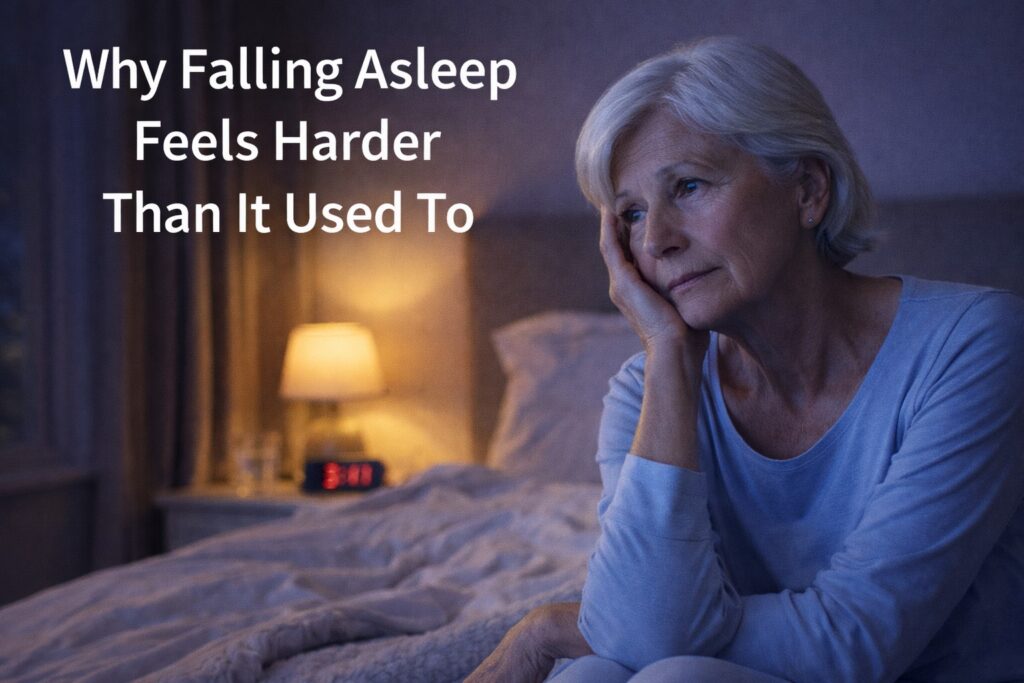
For many older adults, the hardest part of sleep isn’t staying asleep — it’s getting there in the first place. You may lie in bed feeling tired, yet sleep doesn’t arrive the way it once did. The body feels ready for rest, but the mind stays alert. Minutes stretch into hours, and the longer you wait, the more frustrating it becomes.
This experience is common, but it’s rarely talked about in clear, reassuring terms. Many seniors quietly wonder if they’re doing something wrong, if it’s just part of getting older, or if they should be worried. Understanding why falling asleep feels harder can remove much of that uncertainty.
Being Tired Isn’t the Same as Being Ready for Sleep
One of the most confusing parts of sleep difficulty is feeling exhausted but still unable to drift off. Fatigue and sleep readiness are related, but they are not the same thing.
Fatigue reflects low energy. Sleep readiness depends on a balance of biological signals, mental state, and routine. When those signals fall out of sync, the body may want rest while the brain remains alert.
This mismatch is one of the most common reasons seniors struggle to fall asleep, even on nights when they’ve had a full, active day.
Being Tired Isn’t the Same as Being Ready for Sleep
One of the most confusing parts of sleep difficulty is feeling exhausted but still unable to drift off. Fatigue and sleep readiness are related, but they are not the same thing.
Fatigue reflects low energy. Sleep readiness depends on a balance of biological signals, mental state, and routine. When those signals fall out of sync, the body may want rest while the brain remains alert.
This mismatch is one of the most common reasons seniors struggle to fall asleep, even on nights when they’ve had a full, active day.
The Brain Changes How It Approaches Sleep
Sleep doesn’t begin the moment your head hits the pillow. It’s a gradual process guided by brain chemistry and internal timing. As adults grow older, this process often becomes less automatic.
The brain may take longer to shift from daytime alertness into nighttime rest. Thoughts that once faded quickly may linger. Awareness of the environment becomes sharper instead of softer. This doesn’t mean something is wrong — it means the transition into sleep now requires more support.
Quiet Thoughts Can Keep the Mind Awake
Many seniors say, “I’m not anxious,” and they mean it. Falling asleep can still be difficult even without worry or stress.
The mind may replay conversations, plan the next day, reflect on the past, or simply wander. These quiet thoughts are not intrusive, but they keep the brain engaged enough to delay sleep.
Earlier in life, the body often overpowered this mental activity. Later on, the balance can shift, allowing thoughts to stay active longer at bedtime.
Changes in Daily Rhythm Affect Nighttime Sleep
Sleep is influenced by what happens long before bedtime. Activity levels, light exposure, meal timing, and routine all shape how ready the body feels for rest.
As routines change later in life — whether due to retirement, health changes, or lifestyle adjustments — the body’s internal clock can lose some of its clarity. Without strong daytime cues, nighttime sleep may feel less predictable.
This can make falling asleep feel effortful instead of natural.
Bedtime Can Become Associated With Wakefulness
When falling asleep becomes difficult, the bed itself can take on new meaning. Instead of signaling rest, it becomes associated with waiting, thinking, or frustration.
Over time, the brain may learn that bedtime equals alertness rather than relaxation. This response is learned, not intentional, and it can happen even when someone follows good sleep habits.
The more attention given to “trying” to fall asleep, the harder sleep often becomes.
Physical Sensations Can Delay Sleep
Comfort plays a larger role in sleep onset than many people realize. Joint stiffness, muscle tension, temperature sensitivity, or minor discomfort can keep the body from fully settling.
These sensations may not be painful enough to cause alarm, but they can prevent the deep relaxation needed for sleep to begin. The body remains slightly on guard, delaying the transition into rest.
Evening Stimulation Has a Bigger Impact Than It Used To
Later in life, the nervous system often becomes more sensitive to stimulation. Evening activities that once felt harmless — bright screens, lively conversations, late meals, or strong lighting — can linger longer in the system.
This doesn’t mean these activities must be avoided entirely, but their timing matters more than it once did. When stimulation extends too close to bedtime, the brain may struggle to slow down.
Why “Just Relax” Rarely Works
Well-meaning advice to “just relax” can feel frustrating. Relaxation cannot be forced, and sleep cannot be commanded.
When sleep feels harder to reach, the solution is rarely more effort. Instead, it often involves creating conditions that allow the body and mind to gradually let go of alertness.
Understanding this removes the pressure that keeps many seniors awake longer than necessary.
When Difficulty Falling Asleep Is Likely Normal
Occasional trouble falling asleep is part of normal sleep variation, especially if:
- It happens a few nights a week
- You eventually fall asleep
- Daytime energy remains fairly steady
In these cases, the body may simply need more time to transition into sleep.
When Falling Asleep Deserves More Attention
It may be worth looking closer if difficulty falling asleep:
- Happens most nights
- Takes longer than 45–60 minutes regularly
- Leads to dread around bedtime
- Affects mood, focus, or daytime functioning
These patterns suggest that sleep onset difficulty may be interfering with overall rest.
Small Shifts Often Matter More Than Big Changes
Many seniors assume fixing sleep requires drastic changes. In reality, subtle adjustments often make the biggest difference over time.
Consistent routines, gentle wind-down periods, comfort awareness, and reduced pressure around sleep can gradually restore the body’s natural ability to fall asleep.
Progress tends to come quietly, not suddenly.
Understanding Before Action
Before looking for solutions, it helps to understand what has changed. Sleep difficulty later in life is rarely about willpower or failure. It reflects shifts in rhythm, sensitivity, and habit.
Learning to view falling asleep as a process — not a switch — can change the experience entirely.
A Thoughtful Next Step
If falling asleep has become consistently difficult, some seniors choose to learn more about common sleep patterns and challenges experienced later in life. Gaining perspective can help guide calm, informed decisions about what to adjust — and what not to worry about.
Final Thoughts
When falling asleep feels harder than it used to, it can feel discouraging. But this change is common, understandable, and often manageable. Sleep evolves over time, and so can the way we approach it.
With patience, understanding, and the right support, many seniors find that falling asleep becomes less of a struggle — and more of a gentle transition once again. This article is part of that understanding.
Frequently Asked Questions
Why does falling asleep take longer as I get older?
As sleep patterns change over time, the transition from wakefulness to sleep often becomes slower. The brain may stay alert longer, and the body may need more calm cues before sleep begins.
Is it normal to feel tired but still unable to fall asleep?
Yes. Fatigue and sleep readiness are different. You can feel physically tired while your brain remains alert, especially if daily routines or sleep timing are out of sync.
Can quiet thoughts keep me awake even if I’m not anxious?
They can. Planning, reflecting, or gentle mental activity can delay sleep without feeling like stress or anxiety. This is common and often overlooked.
Does trouble falling asleep mean I have insomnia?
Not necessarily. Occasional or even frequent difficulty falling asleep does not automatically mean insomnia. Patterns over time and daytime impact matter more than single nights.
How long is too long to lie awake before sleeping?
If it regularly takes longer than 45 to 60 minutes to fall asleep and begins affecting mood or energy, it may be worth paying closer attention to sleep habits or patterns.
What’s the first thing to do when falling asleep feels difficult?
The first step is understanding what may be contributing to the difficulty. Observing routines, comfort, and mental state can help guide thoughtful next steps.
If falling asleep has become consistently difficult, some readers choose to learn more about sleep support options designed with sensitivity and next-day clarity in mind.
You can read a detailed, senior-focused overview here:
→ Performance Lab Sleep: What Seniors Should Know