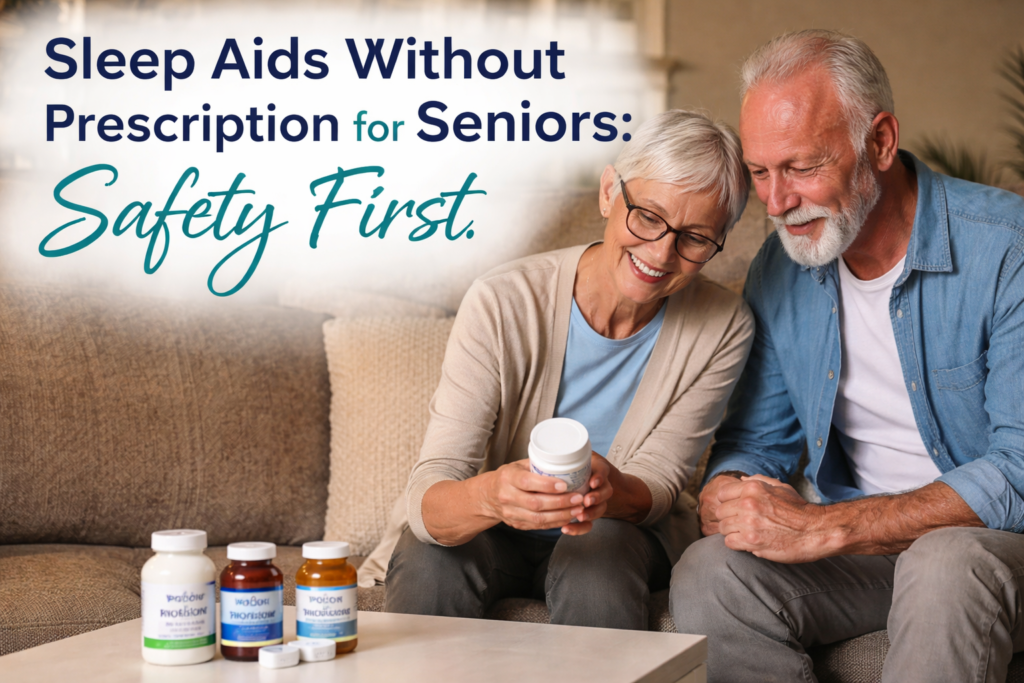
Many older adults want help sleeping—but not at the cost of side effects, dependency, or unnecessary prescriptions. If you’re exploring sleep aids without a prescription, the most important consideration isn’t what works fastest. It’s what works safely, gently, and in a way that respects how sleep changes later in life.
Non-prescription sleep aids can be helpful in certain situations, but they aren’t all equal. Some are appropriate for short-term use. Others are better suited for long-term support. And a few are best avoided altogether. Understanding the difference is what protects your health—and your sleep.
This guide explains what “without prescription” really means, what options seniors commonly encounter, and how to approach them with safety as the first priority.
What “Sleep Aids Without Prescription” Actually Means
Sleep aids without a prescription are typically referred to as over-the-counter (OTC) products. These are available without a doctor’s order and generally fall into a few broad categories:
• Antihistamine-based sleep aids
• Hormone-based supplements (like melatonin)
• Mineral or amino acid supplements
• Herbal or botanical products
While all are legally available without a prescription, that does not mean all are equally safe for older adults. Age changes how the body processes medications and supplements, and what may be tolerated at 40 can cause problems at 65 or 75.
That’s why safety—not availability—should guide your decision.
Why Seniors Should Be Extra Cautious With OTC Sleep Aids
As the body gets older, several changes affect sleep and medication tolerance:
• Slower metabolism and clearance
• Increased sensitivity to sedating compounds
• Higher risk of balance problems and confusion
• Greater likelihood of medication interactions
Some OTC sleep aids linger in the system longer than expected, leading to morning grogginess, dizziness, or mental fog. In older adults, those effects can increase fall risk or interfere with daytime functioning.
This is why many healthcare professionals advise seniors to start with the lowest-risk options first, and to avoid products that rely on heavy sedation.
Common Types of Non-Prescription Sleep Aids (And What to Know)
Rather than listing products, it’s more useful to understand the categories seniors are most likely to encounter.
Antihistamine-Based Sleep Aids
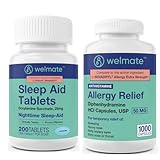
Many popular OTC sleep aids rely on antihistamines originally designed for allergies. These are often marketed for “nighttime” use.
For seniors, these products are usually not the first choice.
Antihistamines can cause:
• Dry mouth and constipation
• Confusion or memory issues
• Urinary retention
• Next-day drowsiness
In older adults, these effects can be more pronounced and longer-lasting. For that reason, antihistamine sleep aids are often recommended only for very occasional use, if at all.
Melatonin Supplements
Melatonin is a hormone the body naturally produces to regulate the sleep-wake cycle. Supplemental melatonin is widely available without a prescription.
For some seniors, low-dose melatonin can be helpful—especially for difficulty falling asleep or adjusting sleep timing. However, more is not better.
Higher doses may lead to:
• Vivid dreams
• Morning grogginess
• Disrupted sleep patterns
Melatonin can be useful when used thoughtfully, but sensitivity varies widely. Some older adults tolerate it well; others do not.

- Sleep Like You Mean It – We’ve improved the formula of our melatonin capsules for adults…
- Ingredients of Your Dreams – Our sleep aid supplement contains 5mg of melatonin, 500mg of…
- Benefits You Can Feel – L-Theanine is known to encourage alpha brain wave activity…
- Tranquil Nights Ahead – Vegan melatonin reinforces your calming sleep routines. Serene…

- Adults take one of these Melatonin 3mg sleep supplements one hour before bedtime with…
- Occasional use sleep support supplement: Contains one 240 count bottle of Nature Made…
- These Nature Made Melatonin Tablets are 100% drug free, gluten free, non habit forming…
- Melatonin is a hormone found naturally in the body that helps to regulate sleep and wake…

Magnesium and Amino Acids
Certain minerals and amino acids support relaxation rather than sedation. These options are often favored by seniors seeking gentler, longer-term support.
Examples include:
• Magnesium (especially well-absorbed forms)
• Glycine
• L-theanine
These do not force sleep. Instead, they support the body’s natural calming processes, which may help improve sleep quality over time. Many seniors find these options easier to tolerate for regular use.

- DIETARY SUPPLEMENT: One bottle of 120 Natural Vitality CALM Sleep Magnesium Supplement…
- RELAX AT NIGHT: Formulated with magnesium glycinate, melatonin, GABA and L-theanine, these…
- MAGNESIUM GLYCINATE: An essential mineral, magnesium glycinate creates a full body calm to…
- MELATONIN: Formulated with melatonin, this CALM Natural Vitality supplement is essential…

- Fall Asleep Faster & Stay Asleep Longer – Premium Melatonin-Free Formula Designed for…
- Clinical Stress & Cortisol Support with KSM-66 Ashwagandha When stress keeps your mind…
- High-Absorption Magnesium Bisglycinate for Relaxation & Muscle Calm We use chelated…
- Calm a Busy Mind – GABA + L-Theanine + Chamomile Blend Ideal for overthinkers or restless…

- FALL ASLEEP, STAY ASLEEP: Relaxium’s Triple-Action formula is guaranteed to help you wake…
- DEVELOPED BY A RENOWNED NEUROLOGIST: Dr. Eric Ciliberti, MD developed Relaxium Sleep to…
- BOOST IMMUNE HEALTH W/ BETTER SLEEP: Sleep deprivation is known to suppress our body’s…
- FALL ASLEEP FASTER, STAY ASLEEP LONGER, AWAKE REVITALIZED: Relaxium’s Triple-Action…
Herbal and Botanical Sleep Aids
Herbal products are commonly marketed as “natural,” but natural does not always mean harmless.
Some herbs may interact with medications or affect blood pressure, heart rhythm, or liver metabolism. Quality and dosage can also vary widely between brands.
This category requires extra caution, especially for seniors managing multiple health conditions.
What Makes a Non-Prescription Sleep Aid Safer for Seniors?
While individual needs vary, safer OTC sleep aids for older adults tend to share a few characteristics:
• Non-sedating or gently calming
• Low risk of dependency
• Short ingredient lists
• Transparent labeling
• No reliance on antihistamines
• Appropriate for long-term use when needed
Sleep support should work with the body, not override it.
If a product promises immediate knockout sleep, that’s often a red flag for older adults.
When OTC Sleep Aids May Be Enough—& When They’re Not
Non-prescription options are most appropriate when sleep issues are:
• Mild or occasional
• Related to stress or routine changes
• Not accompanied by severe daytime impairment
However, ongoing sleep disruption may signal something else—such as sleep apnea, medication side effects, pain, or underlying health conditions.
If sleep problems persist despite safe OTC approaches, it’s important to discuss them with a healthcare professional. Using stronger products without understanding the cause can mask symptoms rather than resolve them.
How This Fits With Other Senior Sleep Guidance
Many people searching for sleep aids without a prescription are really asking a deeper question:
“What can I try first without putting myself at risk?”
In practice, the safest non-prescription approaches often overlap with broader guidance on safe sleep support for seniors. Understanding which options avoid dependency, heavy sedation, or long-term side effects is part of that same conversation.
That’s why education-first resources—not product lists—tend to offer the most value.
Practical Safety Tips Before Trying Any OTC Sleep Aid
Before starting any non-prescription sleep aid, seniors should consider the following:
• Review current medications for interactions
• Start with the lowest effective dose
• Avoid combining multiple sleep products
• Monitor how you feel the next morning
• Stop use if confusion, dizziness, or imbalance occurs
Sleep support should improve your nights without harming your days.
Questions
Are sleep aids without prescription safe for seniors?
Some can be, but safety depends on the type, dose, and individual sensitivity. Sedating products carry higher risk, while gentler options are often better tolerated.
Can OTC sleep aids be used every night?
Certain non-habit forming options may be appropriate for longer-term use, while others should only be used occasionally. This depends on the ingredient and individual response.
Is it better to avoid sleep aids altogether?
Not necessarily. For some seniors, carefully chosen OTC options can provide meaningful relief. The goal is informed, cautious use—not avoidance at all costs.
For a deeper look at options designed to avoid dependency and heavy sedation, you may find it helpful to read our guide to non-habit forming sleep aids for seniors, which explains safety considerations in more detail.
Final Thoughts
Sleep aids without a prescription can play a role in senior sleep support—but only when safety comes first. Availability alone doesn’t determine whether an option is appropriate. Understanding how different categories work, what to avoid, and when to seek additional guidance makes all the difference.
For older adults, the safest path is rarely the strongest solution. It’s the one that supports rest gently, consistently, and without creating new problems along the way.
Disclaimer
The information on this page is provided for general educational purposes only and is not intended as medical advice, diagnosis, or treatment. Sleep needs and responses to supplements can vary, especially for older adults.
Before starting any new sleep aid or supplement, seniors should consider their individual health conditions and medications and consult a qualified healthcare professional if questions or concerns arise.
This content is designed to support informed decision-making and does not replace personalized medical guidance.