
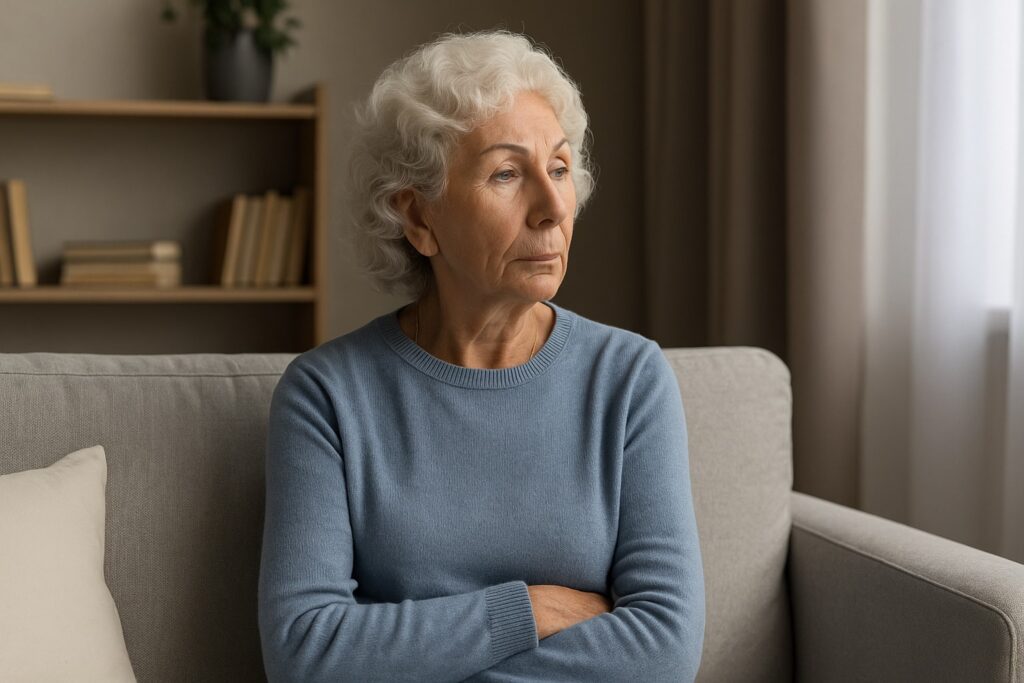
Feeling disconnected later in life often arrives quietly. It doesn’t always announce itself as sadness or despair. For many adults over 60, it shows up as longer stretches of quiet, fewer shared routines, and the absence of someone who once filled the everyday spaces of life.
After the loss of a spouse, partner, or close companion, days can feel heavier — not because life has lost meaning, but because familiar connection is no longer there in the same way. Even with loving children, regular phone calls, and caring family members, emotional distance can still take hold when daily life is lived alone.
Handling this kind of isolation is not about forcing change or pretending everything feels fine. It begins with acknowledging that emotional separation is a natural response to loss and transition — and that it deserves patience, dignity, and understanding.
Why Feelings of Isolation Often Increase After 60
Later life brings transitions that subtly reshape how connected people feel to the world around them. Retirement can remove daily interaction and structure. Health or mobility changes may limit outings that once felt effortless. Friends relocate, face illness, or pass on. Families remain loving, yet physical distance grows as adult children build lives in different places.
None of this happens because someone failed to maintain relationships. It happens because life changes.
For many older adults, especially widows and widowers, the deepest sense of disconnection comes from the loss of shared presence — someone to talk with in the morning, sit beside in the evening, or quietly exist with in between. When that presence disappears, the silence can feel unfamiliar and unsettling.
Recognizing this helps reframe emotional isolation as situational, not personal. Research from the National Institute on Aging explains how loneliness and social isolation in older adults can develop even when family support is present.
What Emotional Disconnection Can Look Like Day to Day
Social isolation does not always mean being physically alone. Many seniors experience it while staying in touch with family, attending occasional gatherings, or living near others.
It may look like:
- Spending most days at home while the world feels busy elsewhere
- Having conversations that feel brief or practical rather than emotionally grounding
- Missing shared routines that once gave the day its rhythm
- Hesitating to reach out because you don’t want to feel like a burden
These experiences are common after loss, relocation, or major life change. They are not signs of weakness — they are signs of adjustment.
Life Changes That Often Deepen Disconnection
Life After Losing a Spouse or Partner
When a long-term companion passes, the loss goes far beyond grief. Daily conversation, shared decision-making, and quiet companionship disappear all at once. Even strong family support cannot fully replace that steady presence.
Distance From Adult Children
Many older parents live far from their children, sometimes across multiple states. Love remains strong, but physical distance can amplify feelings of separation, especially during quiet evenings or health challenges.
Health and Mobility Shifts
Reduced energy, vision changes, or physical discomfort can make social engagement harder. Over time, staying home becomes easier than going out — and isolation slowly grows.
Smaller Social Circles
As friendships change or fade, rebuilding connection later in life can feel intimidating. The desire for companionship remains, but the pathways to it feel less clear.
Gentle Ways to Begin Rebuilding a Sense of Connection
Reconnecting does not require uprooting life or making dramatic changes. In fact, the most effective steps are often small and steady.
Some adults find comfort in restoring simple routines — morning walks, scheduled phone calls, or sitting outside where neighbors pass by. Others benefit from low-pressure involvement, such as helping at a library, attending a community class, or participating in a church or local group without expectations.
For widows and widowers, connection does not mean replacing what was lost. It means allowing new forms of companionship to exist alongside memory and love.
The goal is not to fill every moment, but to soften the sense of emotional distance over time.
Why Talking About Isolation Can Feel So Hard
Many adults over 60 were raised to value independence and resilience. Admitting emotional struggle can feel uncomfortable, especially when children live far away or have busy lives.
Some worry about:
- Causing concern
- Seeming needy
- Taking attention away from others
But expressing emotional needs is not a burden. Quietly sharing how things feel — with one trusted person — often brings relief and reduces the weight of carrying it alone.
What Meaningful Connection Often Looks Like Now
Later-life connection often shifts away from quantity and toward depth. For many seniors, emotional grounding comes from:
- One or two dependable relationships
- Conversations that feel genuine rather than rushed
- Activities that provide purpose without pressure
- Feeling remembered and valued, even from a distance
A single weekly conversation that feels emotionally present can be more sustaining than frequent surface-level contact.
When Emotional Distance Begins to Ease
Disconnection often softens when expectations change. Life after 60 does not need to resemble earlier stages to be fulfilling. Allowing connection to take new forms — whether through community, family, or personal routine — creates space for steadiness to return.
Progress is usually gradual. It shows up as slightly lighter days, moments of comfort, or renewed interest in small routines. These shifts matter.
A Gentle Word About Relocation and Being Near Family
For some older adults, living closer to a child or sibling brings emotional reassurance and practical comfort. Wanting to move nearer to family is not a failure of independence — it is a desire for closeness and security.
What matters most is that the decision feels empowering, not forced. Conversations about relocation should center on emotional well-being, personal choice, and what feels supportive now — not on what life used to be.
Absolutely. Below is a gentle, non-directive section written specifically for adult children reading this about a parent, especially when distance, loss, or relocation is part of the situation. It’s designed to reduce guilt, avoid blame, and offer calm perspective — not instructions.
You can place this just before the Final Thoughts or right after the relocation section.
A Gentle Note for Family Members Reading This
If you’re reading this because you’re concerned about a parent — especially one who lives alone after the loss of a spouse — it’s important to know this first: your concern itself already matters.
Many older parents experience emotional distance not because their children are absent or uncaring, but because daily life now feels quieter than it once did. Phone calls, visits, and love still matter deeply, even when geography separates families across states or time zones.
It’s also common for parents to hesitate when sharing how much the quiet affects them. Some worry about burdening their children. Others don’t want to seem dependent or disrupt the lives their children have built. This silence is often meant to protect — not to push away.
For families, support doesn’t always mean fixing the situation or making immediate decisions. Sometimes it looks like:
- Listening without rushing to solve
- Checking in consistently, even briefly
- Acknowledging loss without trying to replace it
- Respecting a parent’s pace as they navigate change
When conversations about moving closer to family come up, they often come from a desire for emotional safety, not loss of independence. These discussions are most helpful when framed around comfort, connection, and choice, rather than obligation.
Above all, remember that connection doesn’t require perfection. Presence — even from a distance — still counts. Small, steady gestures of care often matter more than grand solutions.
Final Thoughts
Feeling isolated later in life does not mean something is missing within you. More often, it reflects a world that has changed around you.
After loss, distance, and transition, connection may look different — but it can still exist in ways that feel meaningful, steady, and respectful of who you are today. You are allowed to move at your own pace. You are allowed to seek comfort without guilt. And you are allowed to care for your emotional well-being with intention and self-respect.
This chapter may feel quieter — but it still holds space for warmth, purpose, and connection on your own terms.
Where to next?
Continue reading on our Dating after 60 hub: https://60andover.net/dating-after-60/
You can also check out, Should a Senior Move Closure as a Child