
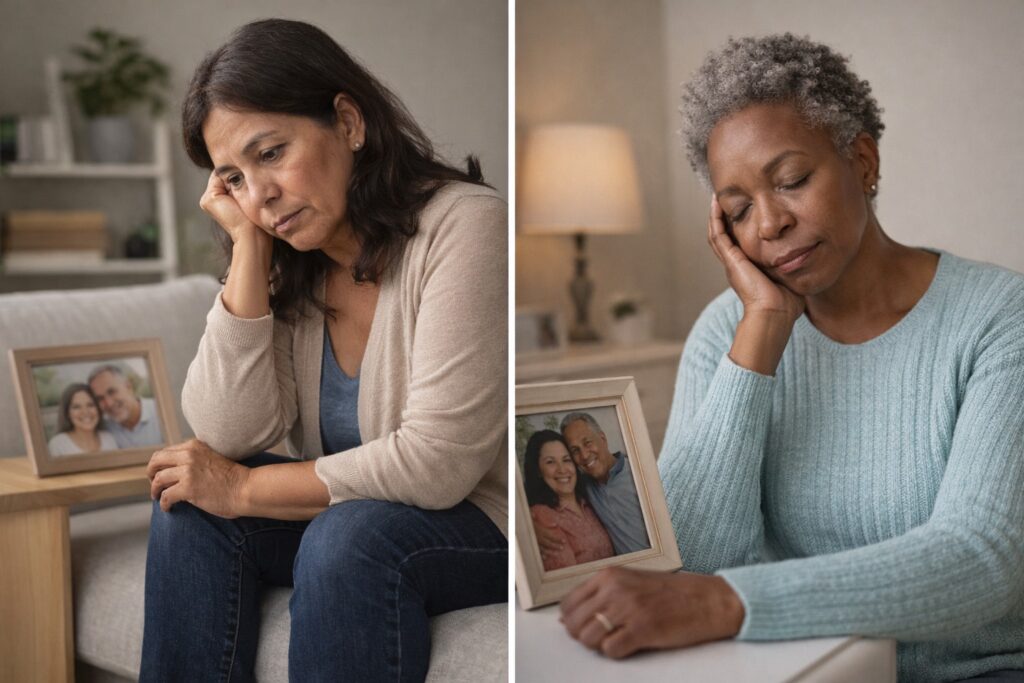
The loss of a spouse changes life in ways that are difficult to explain to anyone who hasn’t lived it. Beyond grief, there is often a quieter, more persistent feeling that settles in over time — a sense of emotional distance from the world that once felt familiar.
For many seniors, loneliness after losing a spouse is not about being surrounded by no one. It’s about missing shared presence. The everyday conversations, routines, and unspoken understanding that once filled the day are suddenly gone. Even when family members remain loving and supportive, life can feel emotionally thinner than before.
This experience is deeply common, and it deserves to be understood without judgment or pressure to “move on.”
Why the Loss of a Spouse Creates a Unique Kind of Isolation
Losing a spouse is not the same as losing other relationships. A long-term partner often fills multiple roles at once — companion, confidant, routine keeper, witness to daily life.
When that presence disappears:
- Mornings and evenings feel quieter
- Decision-making feels heavier
- Shared habits vanish overnight
- Silence becomes more noticeable
This form of isolation isn’t always immediate. Many widows and widowers report that the deepest sense of disconnection emerges months later, after practical matters are settled and support naturally tapers off.
That delayed isolation is normal — and often unexpected.
Why Loneliness Can Feel Stronger Even With Family Support
Adult children often stay in close contact after a loss. Calls, visits, and help with logistics may increase at first. Over time, though, family life resumes its usual pace.
For a senior living alone, that shift can feel abrupt.
Love and care are still present, but the daily emotional companionship once provided by a spouse is no longer there. Phone calls, no matter how caring, cannot fully replace shared physical presence or quiet familiarity.
This doesn’t mean family is doing something wrong. It means grief and emotional isolation operate on a different timeline.
How Widowhood Changes Daily Life in Subtle Ways
Loneliness after loss often appears in small moments rather than dramatic ones.
It may show up as:
- Eating meals alone when they were once shared
- Watching television without commentary or conversation
- Sleeping in a quiet house that once held movement and sound
- Losing motivation for activities once enjoyed together
These changes can make time feel slower and days feel longer, even for seniors who consider themselves emotionally strong.
Why Many Seniors Hesitate to Talk About These Feelings
Many older adults were raised to value resilience, privacy, and independence. After losing a spouse, some worry that expressing loneliness will:
- Worry their children
- Make them seem dependent
- Put pressure on others to fix the situation
As a result, feelings of emotional distance are often kept quiet. Seniors may say they’re “doing fine” while privately struggling with extended solitude.
This silence is usually meant to protect loved ones — not to push them away.
What Actually Helps Ease Loneliness After Loss
There is no single solution, and there doesn’t need to be.
What helps most is not replacing what was lost, but allowing new forms of connection to exist alongside grief.
For some seniors, this looks like:
- Establishing gentle routines that give the day structure
- Participating in low-pressure social environments
- Finding purpose through volunteering or shared interests
- Maintaining consistent, emotionally present contact with one or two people
Progress often happens gradually. Comfort returns in small ways — moments of ease, renewed interest, or quiet stability.
When Wanting to Live Closer to Family Makes Sense
After the loss of a spouse, many seniors begin to reconsider where they live. Wanting to be closer to family often reflects a desire for emotional security, not loss of independence.
Relocation can:
- Reduce feelings of isolation
- Increase spontaneous interaction
- Provide reassurance during health changes
The most supportive decisions are those guided by choice, comfort, and timing, rather than urgency or guilt.
A Gentle Perspective for Adult Children
If you’re reading this because a parent has lost a spouse and seems more isolated, it’s important to know that loneliness is not something you caused — and not something you can instantly fix.
Support often looks like:
- Listening without rushing solutions
- Maintaining consistent contact, even briefly
- Acknowledging the loss without minimizing it
- Respecting your parent’s pace and emotional boundaries
Presence matters more than perfection.
When Loneliness Begins to Soften
For many widows and widowers, emotional isolation gradually becomes less sharp as life settles into new rhythms. The absence never disappears, but it becomes easier to carry.
Connection returns in different forms — quieter, steadier, and shaped by who they are now rather than who they were before the loss.
Final Thoughts
Loneliness after losing a spouse is not a weakness, and it is not a failure to cope. It is a human response to profound change.
With time, patience, and gentle support, many seniors find ways to feel grounded again — not by replacing what was lost, but by allowing life to take a new shape.
If this article resonates with you or someone you love, you are not alone in this experience. And you do not have to rush the process of finding steadiness again.
Where to next?
Next article: Handling Senior Loneliness
Next: Dating after 60 Hub