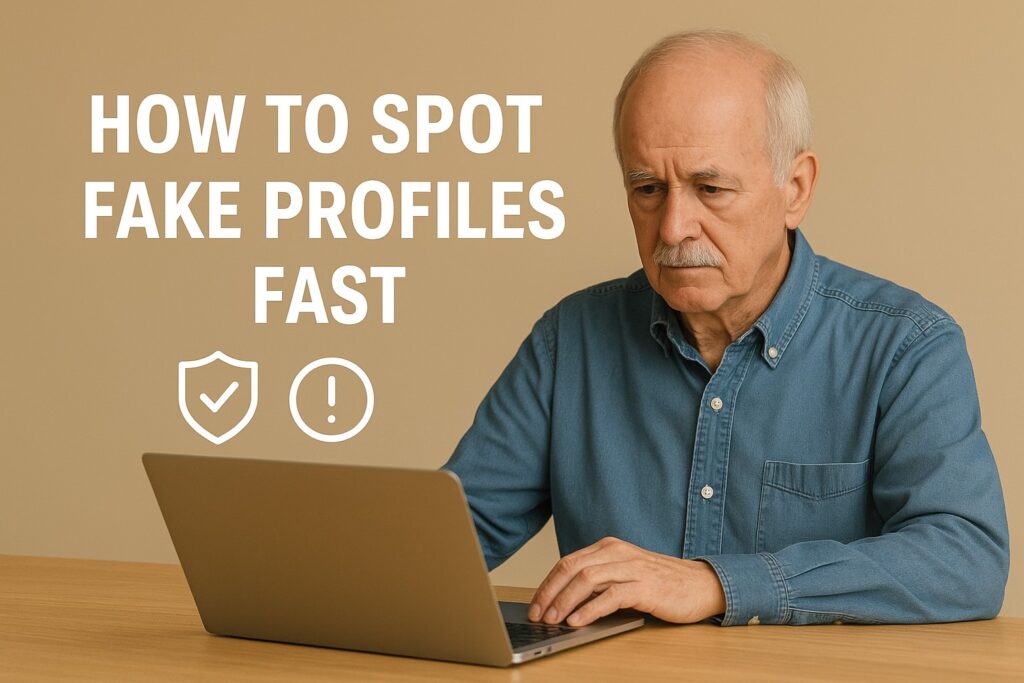
Online dating can be exciting and meaningful later in life, but it’s also where fake profiles appear most often. Many seniors want safe online dating practices for adults over 60, and one of the strongest protections is learning to recognize digital red flags early. While many people online are genuine, scammers design convincing profiles meant to create trust quickly. When you know what to look for, you can avoid wasting time, protect your emotions, and stay safe.
Fake profiles have become more polished, using real-looking photos, dramatic life stories, and scripted messages. Even experienced users sometimes struggle to identify them at first glance. But the following guidance will help you understand how to spot fake dating profiles before they become a problem.
1. The Photos Look “Too Perfect” or Too Professional
A genuine profile usually includes relaxed, everyday photos — sitting at a table, outdoors, smiling at the camera, or enjoying a hobby. A fake profile often uses:
- Studio-quality images
- Model-like poses
- Photos with unrealistic lighting or backgrounds
- Pictures that feel more like advertisements than real life
If every photo looks polished, curated, or strangely flawless, it’s a strong sign the images were taken from elsewhere.
Tip: Run a reverse image search. If the photo appears on multiple profiles or foreign websites, it’s fake.
2. The Bio Is Vague, Generic, or Emotionally Overreaching
Real profiles share specifics: hobbies, values, interests, life stories, and real experiences. Fake profiles tend to sound like greeting cards or scripted introductions. Look for bios that:
- Mention “honesty, loyalty, and respect” but nothing personal
- Use repeated clichés like “looking for my queen”
- Include long paragraphs with dramatic emotional language
- Avoid clear details about their job, family, or daily life
A scammer’s goal is to appeal to as many people as possible. A real person writes in their own voice. When a bio feels scripted or hollow, trust your instincts and treat it as part of your senior dating protection guide.
3. Their Story Has Gaps, Inconsistencies, or Too Much Drama
Fake profiles often include dramatic circumstances as part of their story — deployed overseas, stuck in another country, widowed in a tragic accident, raising a child alone, or finishing a big “business deal.” These narratives are designed to create sympathy early.
If someone’s background feels overly complicated, vague, or sensational, trust your instincts. Real people have real details: where they grew up, what they enjoy, and what their daily life looks like.
4. They Message You Immediately With Over-the-Top Interest
Most fake profiles respond fast — very fast — because scammers are online all day. Their messages may include:
- Excessive compliments
- Emotional declarations early on
- Pet names after only a few exchanges
- Language that feels formal or outdated
A genuine person typically builds connection gradually. A scammer pushes intimacy because it creates emotional leverage.
5. They Avoid Video Chats or Phone Calls
One of the strongest tools in how to verify someone online is asking for a video call. A scammer almost always avoids live interaction because they cannot match the photos on their profile. If someone offers repeated excuses — broken camera, poor Wi-Fi, or endless travel — take that as a sign to step away.
6. They Try to Move the Conversation Off the Dating Platform Quickly
Dating apps have reporting tools — scammers avoid them. Fake profiles try to move you to:
- Telegram
- Text messaging
The moment someone insists on switching platforms early, step back. Staying on the dating app gives you built-in safety protections.
7. Their Work Story Sounds Like a Setup
A common pattern among scammers is claiming to work jobs that create distance or prevent in-person meetups, such as:
- Engineers or contractors overseas
- Military officers stationed abroad
- Oil rig workers
- International doctors
- Business professionals traveling for “projects”
These roles are chosen intentionally — they justify why the person can’t meet, video chat, or talk regularly.
8. Their Writing Style Doesn’t Match Their Profile
Sometimes the profile says the person is from your state, but the messages sound like someone writing from another country. Clues may include:
- Odd phrasing
- Strange punctuation
- Abrupt changes in writing tone
- Repeated scripts used word-for-word
If the communication style doesn’t match the person they claim to be, pay attention.
9. They Avoid Answering Simple, Direct Questions
A genuine match happily shares:
- Their favorite restaurant
- The last place they traveled
- What their typical day looks like
- How many siblings they have
A fake profile sidesteps these questions by changing the subject, responding vaguely, or pushing emotional conversation instead of practical details.
10. Your Instincts Feel “Off” — and That’s Enough
Even when the signs are subtle, your intuition is one of the strongest tools you have. Seniors have decades of life experience, and when something doesn’t feel natural, it’s usually for a reason.
If you ever feel uneasy, pressured, or confused by someone’s behavior, stepping away is not only acceptable — it’s wise. You don’t owe anyone continued communication.
Conclusion
Understanding how to stay safe while dating online doesn’t require fear — just awareness. Fake profiles rely on secrecy, speed, and emotional pressure. Real relationships grow through honesty, calm pacing, and clear communication. When you move slowly, verify identities, and pay attention to red flags, dating becomes far safer and more enjoyable.
There are good people online seeking genuine connection. With clarity and caution, you can protect your heart, your privacy, and your peace of mind — and still remain open to meaningful companionship.
For more guidance, remember to visit our Dating After 60 Hub, where you’ll find deeper safety advice, emotional support, and practical steps for confident online dating.
FAQ: How to Spot Fake Profiles Fast
1. What are the biggest red flags that a dating profile is fake?
Some signs stand out immediately. Fake profiles often use only one or two professional-looking photos, avoid answering personal questions, or offer long emotional messages very early on. You may notice their stories don’t line up, or their details change from one conversation to the next. Many scammers also push quickly for communication off the dating site, which reduces the platform’s ability to detect suspicious behavior. When these clues appear together, it’s usually a sign to step back and protect yourself.
2. Should I trust a profile that seems “too perfect”?
It’s normal to meet kind, attractive, or impressive people online — but fake profiles often exaggerate everything. When someone appears flawless, instantly devoted, and shares every interest you have, it’s wise to slow down. Scammers design profiles that feel like a dream match because it lowers your guard. Real people have real imperfections, mixed schedules, and natural boundaries. Trust your instincts and look for consistency, not perfection.
3. How can I confirm someone is who they say they are?
A simple video chat is one of the quickest ways to confirm identity. Scammers almost always avoid real-time video due to fear of being exposed. If they repeatedly give excuses — poor internet, camera broken, working overseas — this is a strong sign of deception. You can also reverse-image-search their photos to see if they appear on multiple unrelated profiles, which is a common trick scammers use.
4. Is it safe to move the conversation off the dating platform?
Not right away. Scammers push to WhatsApp, text, or email quickly because dating sites have built-in fraud detection and account monitoring. Staying on the platform gives you more protection and creates a record of your conversations, which helps if a problem arises. Only move away from the platform when you feel comfortable and after verifying that the person is genuine.
5. What information should I never share with someone I just met online?
Your address, financial details, Social Security number, and medical or insurance information should never be shared with a new contact. You also shouldn’t tell them your banking institution, daily routines, or travel plans. Scammers look for personal information they can use to impersonate you or pressure you into sending money. Keep your early conversations light and general until trust is earned.
6. What do scammers usually ask for first?
Most begin by asking for a phone number so they can move the conversation away from the dating site. Soon after, many claim they are experiencing an emergency and need help. They may ask for:
- Money “just until next week”
- Gift cards
- Prepaid debit cards
- Rideshare credits
- Help paying for travel to come see you
These requests are nearly always scams. A genuine romantic connection will never require secret financial help from someone they just met online.
7. What should I do if I think I’m talking to a scammer?
Stop responding immediately and report the profile to the dating platform. Do not confront the person directly — scammers often become aggressive or try harder to pull you in. If you shared personal information, monitor your accounts closely and consider placing alerts with your bank or credit card provider. If money was sent, file a report with the Federal Trade Commission (FTC) at ReportFraud.ftc.gov so they can document the incident.
8. Can seniors safely date online even with all these risks?
Absolutely. Older adults build wonderful, meaningful relationships online every day. Safety comes from slowing down, verifying who you’re speaking with, and recognizing typical scam patterns. With the right habits — video chats, cautious sharing, and listening to your instincts — online dating becomes far safer and more enjoyable. The goal isn’t to fear the process, but to move through it with confidence and clarity.
Want More Senior-Focused Dating Guidance?
Explore trusted articles, safety tips, and emotional support designed specifically for adults over 60. Build confidence, stay protected, and move forward with clarity on your dating journey. Visit the Dating After 60 Hub
Find genuine compatibility?
If you’d like a dating platform known for verified profiles and stronger identity checks, many seniors prefer using eHarmony because it reduces the number of fake accounts you’re likely to encounter. It’s not a guarantee of perfection, but it can create a safer starting point when you’re ready to meet someone genuine.
Try eHarmony’s Senior-Friendly Matching